
Last updated November 16, 2026
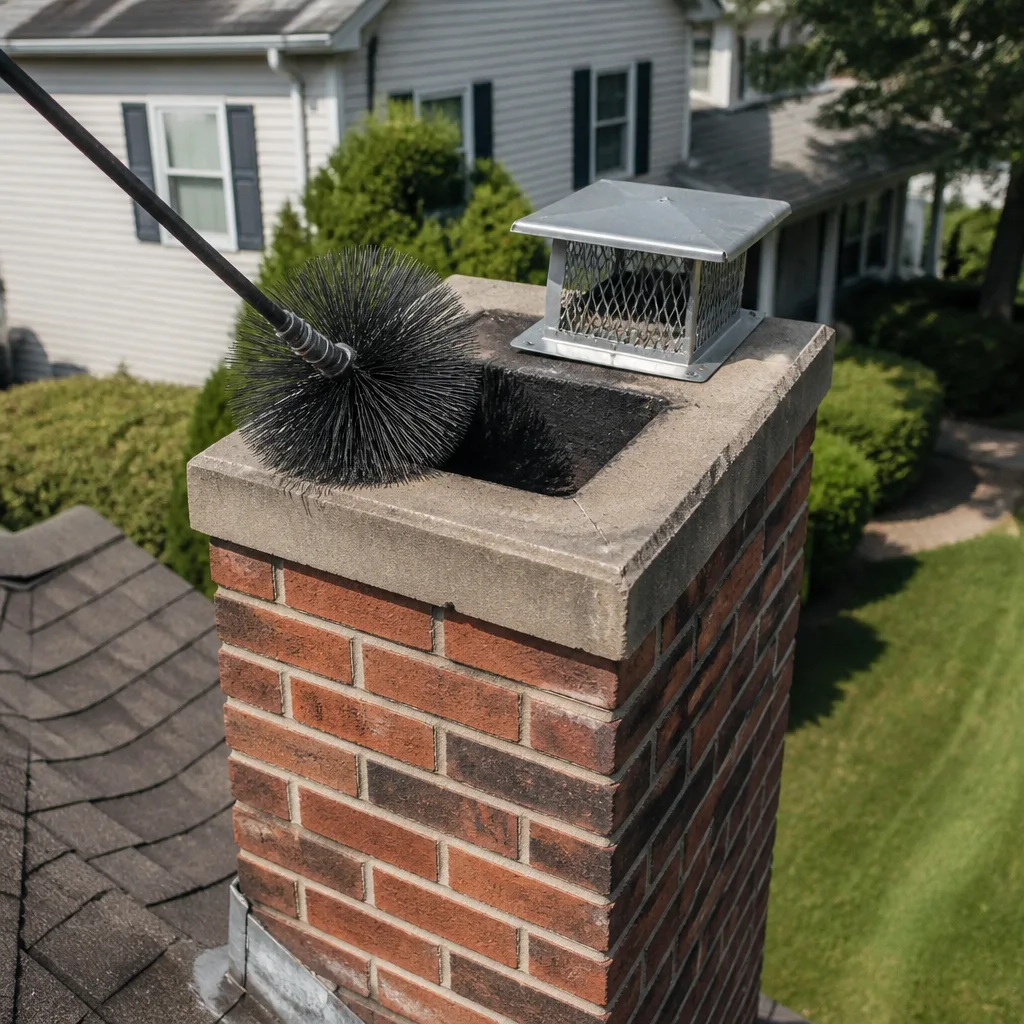 Sweep & inspection
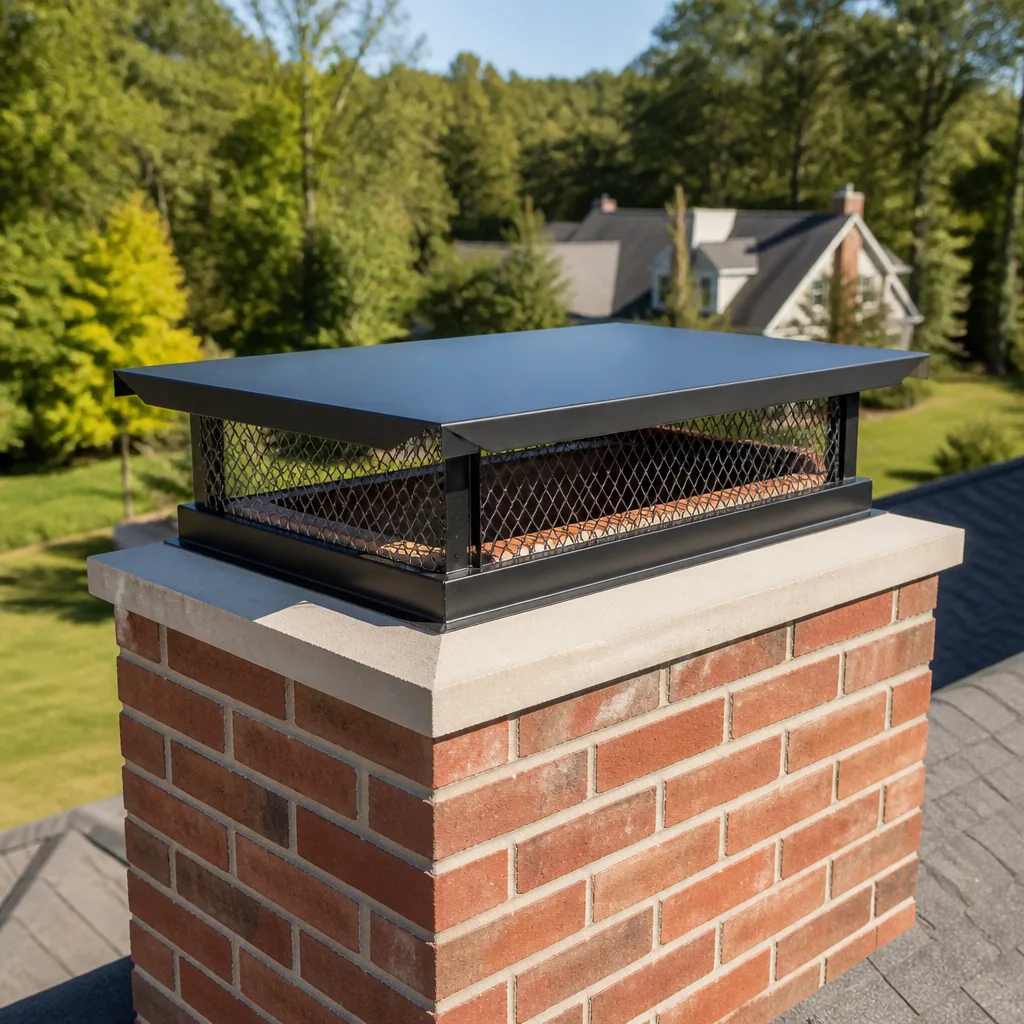 Caps & crowns
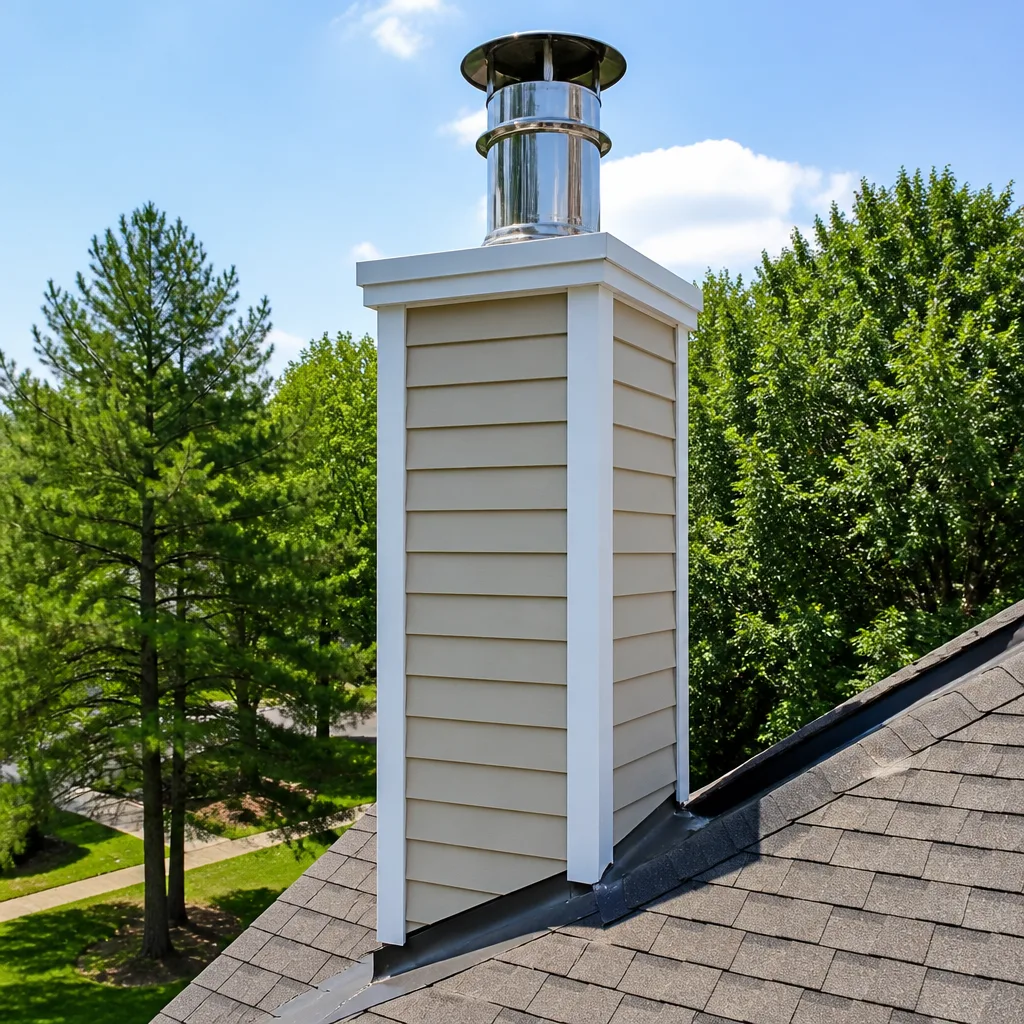 Flue relining
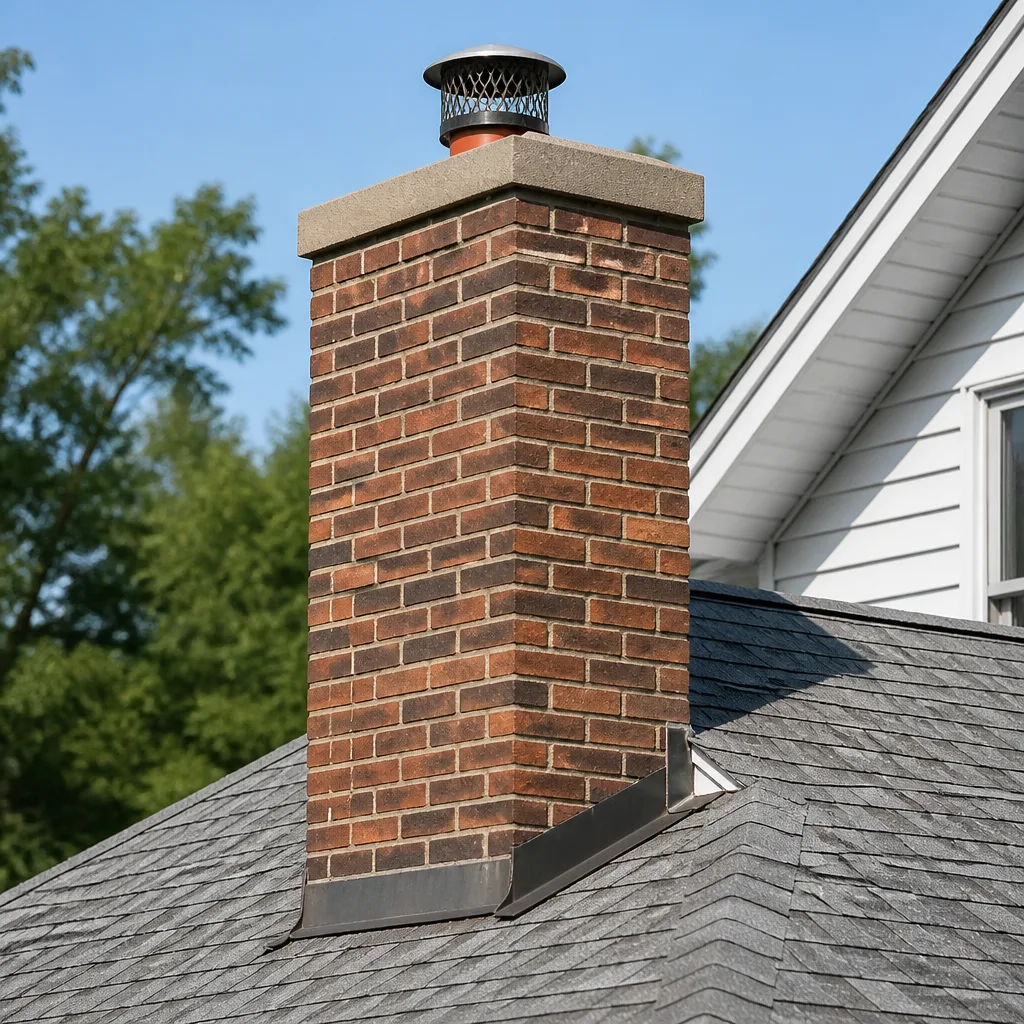 Masonry repair
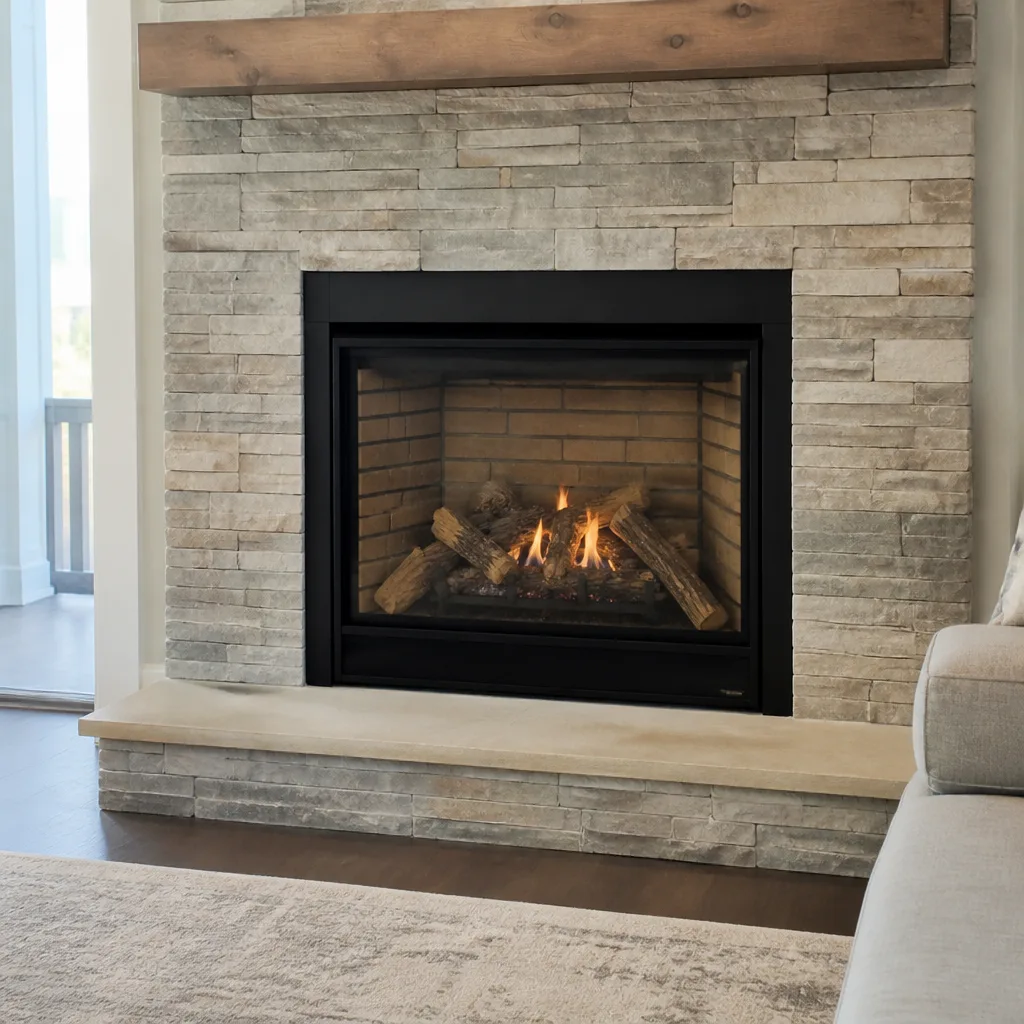 Gas fireplace service
Level 1 sweep and inspection to the NFPA 211 annual standard - flue, crown, cap, and flashing checked and photographed
Chimney sweep logs do not sweep chimneys. They loosen some creosote - which then falls where a brush and vacuum still have to collect it.
DIY vs Professional Chimney Cleaning: The Oklahoma City Homeowner’s Decision Guide
Chimney brushes and rods are sold at every home improvement store in Oklahoma City, and they do remove surface soot. The problem is that surface soot removal without inspection is the equivalent of painting over a wall without knowing what’s behind it. A homeowner can scrub a straight, accessible flue and feel productive doing it. What that homeowner cannot do is look at the inside of that flue with a camera, judge whether the liner has cracked from a previous overfire, or tell the difference between a harmless dusting of Stage I creosote and the glazed, tar-like Stage III deposit that signals real danger.
This guide is about where DIY cleaning genuinely works, where it quietly fails, and where it can actually create problems you didn’t have before. If you’ve ever stood in front of a rack of brushes at a hardware store in Oklahoma City wondering whether you’re about to waste an afternoon, this is written for you.
Quick Answer
DIY chimney cleaning is only appropriate for a straight, accessible flue that has been professionally inspected and confirmed free of structural concerns. In every other case – Stage II or III creosote, a damaged liner, a smoke chamber that needs evaluation, cleaning after a chimney fire, or documentation required for insurance or a home sale – professional cleaning and inspection is the correct choice. In Oklahoma City, where the burning season runs through cold snaps and ice storms, the diagnostic value of a camera inspection is the real reason to call a specialist.
Almost everything else in this guide unpacks that answer.
Styles & brands we work with
- Sweep & inspection
- Caps & crowns
- Flue relining
- Masonry repair
- Gas fireplace service
Table of Contents
- What DIY Chimney Cleaning Can Legitimately Accomplish
- What Requires Professional Equipment and Training
- The Specific Scenarios Where DIY Cleaning Creates Liability Problems
- Equipment Reality Check: Kits vs. Professional Tools
- Oklahoma City Insurance Considerations After a Chimney Fire
- A Step-by-Step Decision Framework
- Understanding the Three Stages of Creosote
- How Often Oklahoma City Chimneys Actually Need Sweeping
What DIY Chimney Cleaning Can Legitimately Accomplish
There is a real, narrow, honest case for DIY chimney cleaning. It isn’t zero. A homeowner who has already had the chimney inspected by a professional, who knows the liner is intact and the smoke chamber is clear, and who has a straight flue with no offsets can brush down loose Stage I creosote between professional sweeps. That’s a legitimate scope. It isn’t the same as a sweep, and it doesn’t replace one, but it’s not nothing.
Here’s what a homeowner with the right setup can actually accomplish:
- Remove light, flaky Stage I creosote from a flue the homeowner has been told is structurally sound.
- Keep the firebox and damper area clear of ash and loose debris between professional visits.
- Do a visual check of the visible flue from the roof and the firebox looking up – useful for spotting obvious blockages like bird nests or leaf debris.
- Brush the connector pipe on a freestanding wood stove where it’s easy to disassemble and inspect.
- Identify that it’s time to call someone when the brush comes back coated in anything other than dry, powdery soot.
What’s telling about that list is that every item depends on an inspection that already happened. The DIY cleaning is downstream of a professional decision. It’s the middle of a process, not the start of one.
The other thing worth understanding: brute-force brushing of a flue that has stage II or glazed stage III creosote doesn’t remove it. It polishes it. A rotary brush spun by hand into a tar-glazed flue will knock off the loose outer layer and leave the rest, which gives the homeowner a false sense of cleanliness and a chimney that’s still a fire risk. We’ve seen this before a professional chimney sweep arrives; the fact that the brush came back clean often means it never touched the danger.
What Requires Professional Equipment and Training
The line between DIY and professional chimney cleaning isn’t drawn at access or effort. It’s drawn at diagnosis. The homeowner can do work. The homeowner cannot do analysis.
Here’s what genuinely requires professional tools and a trained eye:
- Video camera inspection of the flue interior. A homeowner can’t see cracks in a clay tile liner from the firebox. A camera on a rod can, and it documents what it finds on video.
- Smoke chamber evaluation. The smoke chamber above the damper is the most failure-prone part of many masonry chimneys in Oklahoma City and the hardest to assess without the right light and camera angle. Its angled walls collect creosote and its condition determines how smoothly smoke drafts.
- Stage II and Stage III creosote treatment. These deposits require rotary cleaning tools, chemical treatments, or in some cases relining. Hand-brushing won’t remove them.
- Liner integrity assessment. Whether a clay tile has cracked or a metal liner has separated at a joint is the difference between “safe to burn” and “stop.” Only inspection tells you which one you’re looking at.
- Cap and crown inspection. The cap and crown are what keep water, animals, and debris out of the flue. A damaged crown is a slow water intrusion problem that quietly destroys mortar over years.
- Draft and depressurization diagnosis. When a fireplace smokes into the room, the cause could be the flue, the house’s air balance, or the firebox geometry. Diagnosing that requires test equipment and experience.
- Post-fire assessment. After a chimney fire, the internal condition of the flue is unknowable without a camera inspection – and treating it as though nothing happened is how a small fire becomes a structural repair.
Almost all of what’s on that list comes back to one piece of equipment: the inspection camera. The camera is the whole game. It’s the difference between a homeowner who knows their chimney is clean and a homeowner who hopes so.
The Specific Scenarios Where DIY Cleaning Creates Liability Problems
There are three situations where a homeowner’s DIY cleaning isn’t just less effective than a professional sweep – it actively creates a problem. It’s worth knowing these three cold, because they come up more than people expect.
After a Chimney Fire
A chimney fire often burns itself out, and from inside the house it can seem like nothing happened. There may be no obvious damage to the firebox. But a fire hot enough to ignite creosote is hot enough to crack a clay liner, warp a metal liner, or damage the mortar at the flue joints. A homeowner who brushes the flue afterward and goes back to burning is betting the structure of the chimney on a visual inspection from the wrong angle. If your chimney has had a fire, the next step is inspection, not cleaning. A professional sweep with a camera will tell you whether the flue is intact or needs relining before you light another fire. Our team at Linden Chimney Cleaning handles this exact sequence – inspect first, clean second, and only then talk about whether repair work is needed.
Before Selling a Home
Home inspectors, buyers, and their agents increasingly expect documentation of chimney condition, not just a clean firebox. A DIY brush-down produces nothing a buyer can rely on. A professional sweep with a written report and a photo record does. In the Oklahoma City market, where homes change hands regularly and many were built decades ago with original clay liners, a clean-and-document sweep before listing saves a lot of friction during the inspection period.
After Extended Non-Use
A chimney that hasn’t been used in a few years is often a bigger problem than one that’s been used steadily. Animals nest in flues. Caps get knocked off and let rainwater down the liner. A disconnected flue tile can settle. Brushing a flue that’s been sitting for years without first inspecting what’s inside means you’re cleaning around whatever the blockage is, not removing it. The right move after long non-use is inspection first.
Equipment Reality Check: Kits vs. Professional Tools
Consumer brush-and-rod kits are inexpensive and they work – for what they do. A basic kit at a home improvement store in Oklahoma City costs less than a professional sweep. That’s the honest part of the DIY pitch, and it deserves to be acknowledged.
But compare like with like. Also compare the actual decision each route lets you make.
- DIY kit: Polypropylene brush, fiberglass or steel rods, maybe a shop vacuum. Removes loose Stage I creosote. Doesn’t inspect. Doesn’t evaluate liner condition. Doesn’t clean above the smoke chamber effectively.
- Professional sweep: Rotary brushes in multiple diameters, camera inspection on a flexible rod, drop cloths and HEPA vacuums to keep soot out of the living space, tools to clean the smoke chamber and the firebox, and a written report with photos.
- Specialty tools: Stage II and Stage III creosote require tools a homeowner won’t have – heavy-duty rotary chains, chemical treatment products, and in some cases HeatShield resurfacing for ceramic flue restoration. Those are company-level capabilities, not consumer-kit capabilities.
And the time investment is real. A homeowner doing a competent DIY brush-out of a two-story chimney from the roof – setting up, brushing, cleaning up, and washing down the firebox and floor afterward – can expect to spend the better part of half a day. A professional sweep does it faster and without leaving soot in the living room, because the drop cloths and vacuum are part of the equipment.
The trade isn’t “brush vs. brush.” It’s “brush vs. brush plus inspection plus dust containment plus documentation.” Those are the things you’re actually buying when you hire out.
Oklahoma City Insurance Considerations After a Chimney Fire
If you’ve had a chimney fire and plan to file a claim, the insurance carrier will typically want more than a verbal description. Depending on the policy and the adjuster, they may want:
- Documentation of the fire’s date and circumstances.
- A professional assessment of damage to the flue, firebox, and surrounding structure.
- Photos or video of the interior flue condition.
- An itemized scope of recommended repair work.
None of that comes from a DIY cleaning. A homeowner who brushes the flue and lights a fire doesn’t produce documentation, and if the chimney was damaged and a subsequent fire causes additional loss, the carrier will ask what evidence exists of the chimney’s condition when the first fire happened. If the answer is “none,” that becomes a claims problem. Post-fire cleaning without inspection can also make the damage harder to assess later, because soot patterns are evidence and a brush removes evidence.
This is why the sequence matters so much. Inspection first. Camera evidence. Written report. Then cleaning, then any repair scope. A professional company in Oklahoma City – whether it’s us or anyone else – should be willing to give you a written account of what a camera saw. If a company is unwilling to share a photo report, that’s not an inspection, it’s a sales tactic. The photo report is the point.
Linden Chimney Cleaning can work with your insurer on documentation, and we’ll provide camera evidence of pre-existing conditions before any cleaning touches the flue. That’s the one form of insurance help we’ll put our name behind – evidence a homeowner can see for themselves.
A Step-by-Step Decision Framework
Here’s the sequence we’d actually recommend a homeowner walk through before deciding DIY or professional. It maps to how we think about the decision at Linden Chimney Cleaning, and it works regardless of who you hire.
- Ask when the chimney was last professionally inspected. If it’s been more than a couple of seasons, or if you don’t know, the answer is inspection, not DIY. Anything downstream of “unknown” should start with a camera.
- Confirm the chimney hasn’t had a chimney fire in the last few years. If it has, inspection is mandatory. DIY cleaning is off the table.
- Check whether the flue is straight and accessible. A straight flue with no offsets and a clean firebox can be brushed by a homeowner after inspection. A flue with offsets, a top-mounted damper, or a smoke chamber that needs work cannot.
- Confirm the cap, crown, and flashing are intact. If any of these are damaged, that’s a repair issue – not a cleaning issue – and needs a professional.
- If you’re selling the home or expect to file an insurance claim, hire out. Documentation is the deliverable, and DIY cleaning doesn’t produce one.
- If everything above checks out, DIY brushing of a Stage I flue is reasonable. Keep expectations modest. It’s maintenance between professional sweeps, not a substitute for them.
- Schedule a professional sweep before each burning season. This is the core discipline. Everything else is a decision made between those scheduled visits.
What makes this list useful is the second item. Chimney fires are more common than most homeowners assume, and a small fire can be indistinguishable from no fire to a person without a camera. Any decision framework that doesn’t start with “has there been a fire?” isn’t a framework.
Understanding the Three Stages of Creosote
Creosote is the tar-like byproduct of incomplete combustion that coats the inside of the flue. It’s the reason chimney cleaning exists. It comes in three stages, and each one determines whether DIY is possible.
- Stage I creosote is flaky, dry, and black. It can be brushed off with a standard chimney brush. Homeowners with a clean, straight, inspected flue can brush this stage. Professional sweeps also brush this stage – they just do it with better tools and containment.
- Stage II creosote is dense, tar-like, and sticks to the flue surface. It isn’t removed by a standard hand brush. It requires rotary tools, and often chemical treatments, spun by a professional. DIY brushing at this stage polishes the outer layer without removing the danger beneath.
- Stage III creosote is a glazed, hard, tar coating that’s fully baked onto the flue. It’s the most dangerous stage, and it’s often the reason a flue needs resurfacing or relining rather than a simple cleaning. Removing it requires professional tools, and in some cases a full reline.
What makes creosote tricky is that a homeowner can’t tell by looking from the firebox which stage is present in the flue – the eye can’t see up and around. The brush tells a partial story. A camera tells the whole one. In our experience, this is where the DIY conversation about Oklahoma City homes gets most honest: the brush says “clean,” the camera often says otherwise.
How Often Oklahoma City Chimneys Actually Need Sweeping
The general rule of thumb is once a year for actively used fireplaces. But the “how often” question in Oklahoma City depends on three things: how much you actually burn, what you burn, and how the chimney was built.
- Burning frequency. A homeowner who lights three fires a season has a different sweeping schedule than a homeowner who runs the fireplace most winter evenings.
- Wood quality. Seasoned, dry wood burns cleaner. Unseasoned or “green” firewood produces more creosote per fire and shortens the interval between sweeps. Firewood left over from prior years in an Oklahoma City backyard may be dry, but firewood bought in-season often isn’t.
- Chimney design. An older masonry chimney with clay tile liners – common in older Oklahoma City homes – typically needs more attention than a newer chimney with an insulated metal liner. The clay liner itself can crack over time, and the crack is the story, not the creosote.
- Heating appliance. Freestanding wood stoves and inserts burn hotter than open fireplaces and can produce more creosote at the flue if not drafted properly. Open fireplaces run cooler and can produce more creosote at the smoke chamber.
The safest schedule for most Oklahoma City homeowners is one professional sweep with inspection before the burning season, and a second inspection whenever an appliance has been idle for years or has had a fire event. That’s a rhythm a homeowner can plan around, and it replaces the guesswork of “should I brush the flue this year?” with a scheduled checkpoint.
If that feels like overkill for a lightly used fireplace, think about what an inspection is actually doing. It’s not just cleaning. It’s confirming the chimney is safe to use for the season. That’s the service. Cleaning is the byproduct.
Common Mistakes to Avoid
- Brushing a flue you haven’t had inspected. A brush removes evidence as fast as it removes soot. If a chimney fire happened last season, the brush makes the damage harder to find, not easier. Inspection always comes first.
- Using a metal brush on a metal liner. Consumer brush kits are designed for the wrong flue type more often than they’re designed for the right one. A stiff brush against a DuraFlex-style liner can scuff the surface and shorten the liner’s life – check what you have before you brush.
- Assuming a brown brush means the flue is clean. A brush that comes back coated in tar means it’s not removing the deposit, not that the flue is clear. Stage II creosote is what surface brushing leaves behind.
- Skipping the smoke chamber. Homeowners clean what they can reach from the firebox or the roof. The smoke chamber is the space in between, and it’s the most common location for hidden creosote buildup.
- Cleaning after a chimney fire without inspection. Cleaning a chimney that’s been through a fire – before a camera has looked at the liner – is a hazard, not a maintenance chore. It’s the single most important mistake on this list.
- Cleaning before a home sale and calling it documentation. A buyer’s inspector will look at the chimney. A “recently cleaned” claim without a written report doesn’t hold up, and a delayed repair becomes a negotiation problem.
- Waiting until the first cold snap. Chimney sweeps in Oklahoma City fill up when temperatures drop. Booking in early fall, before the first freeze, keeps the schedule manageable and catches problems before they become urgent.
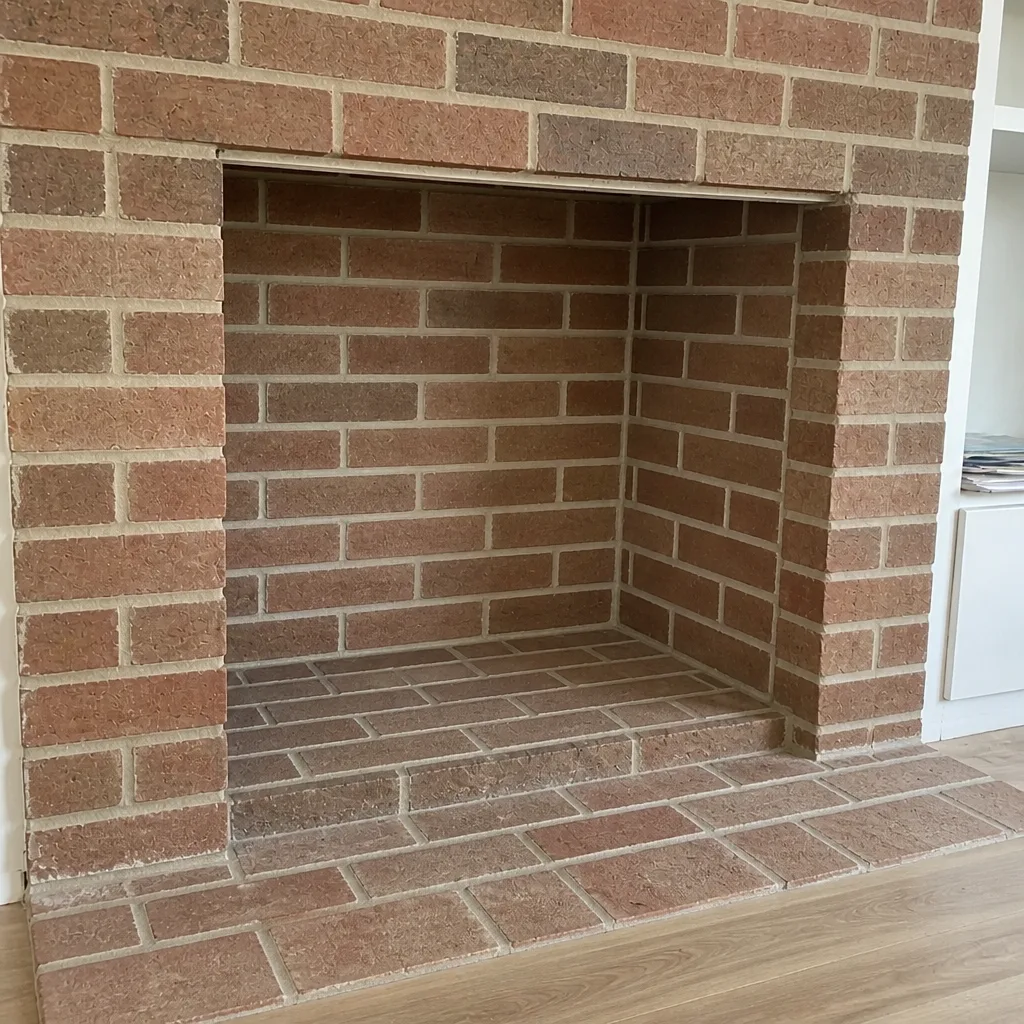
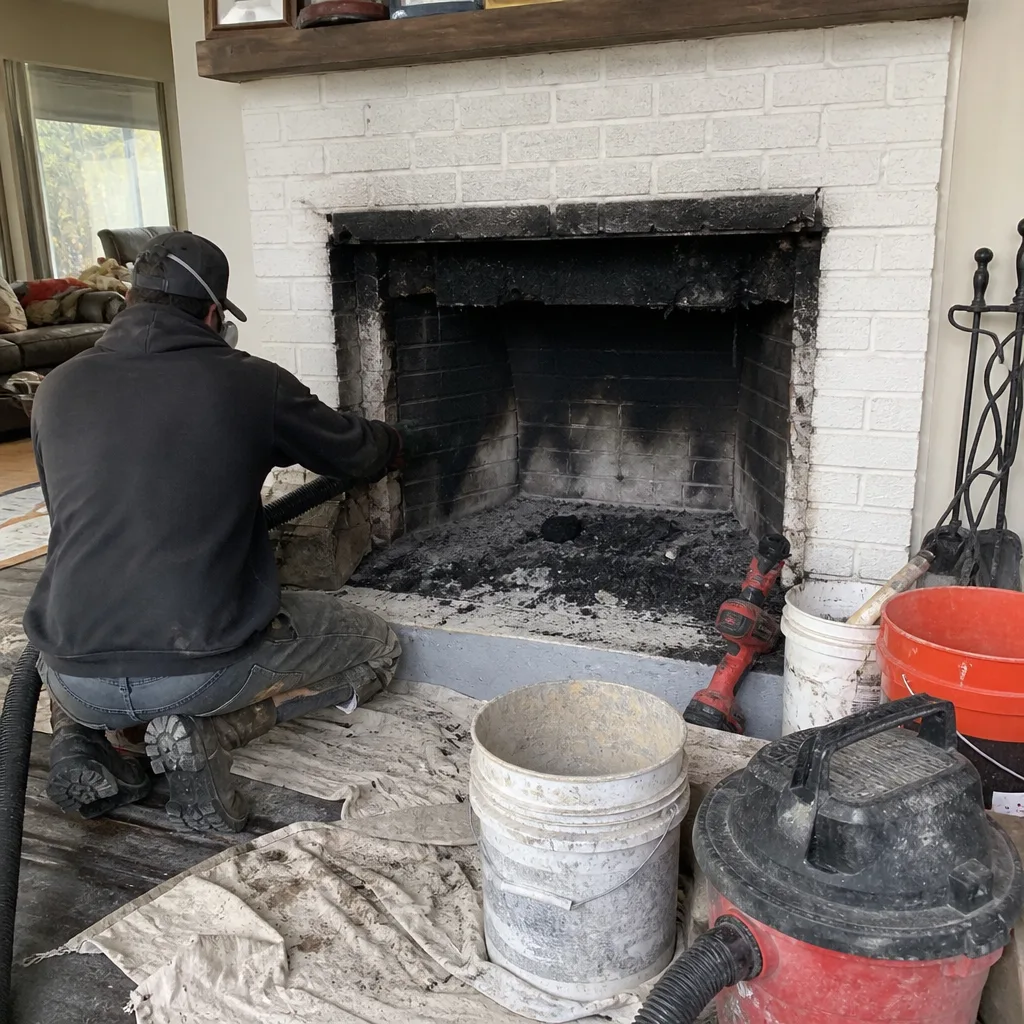
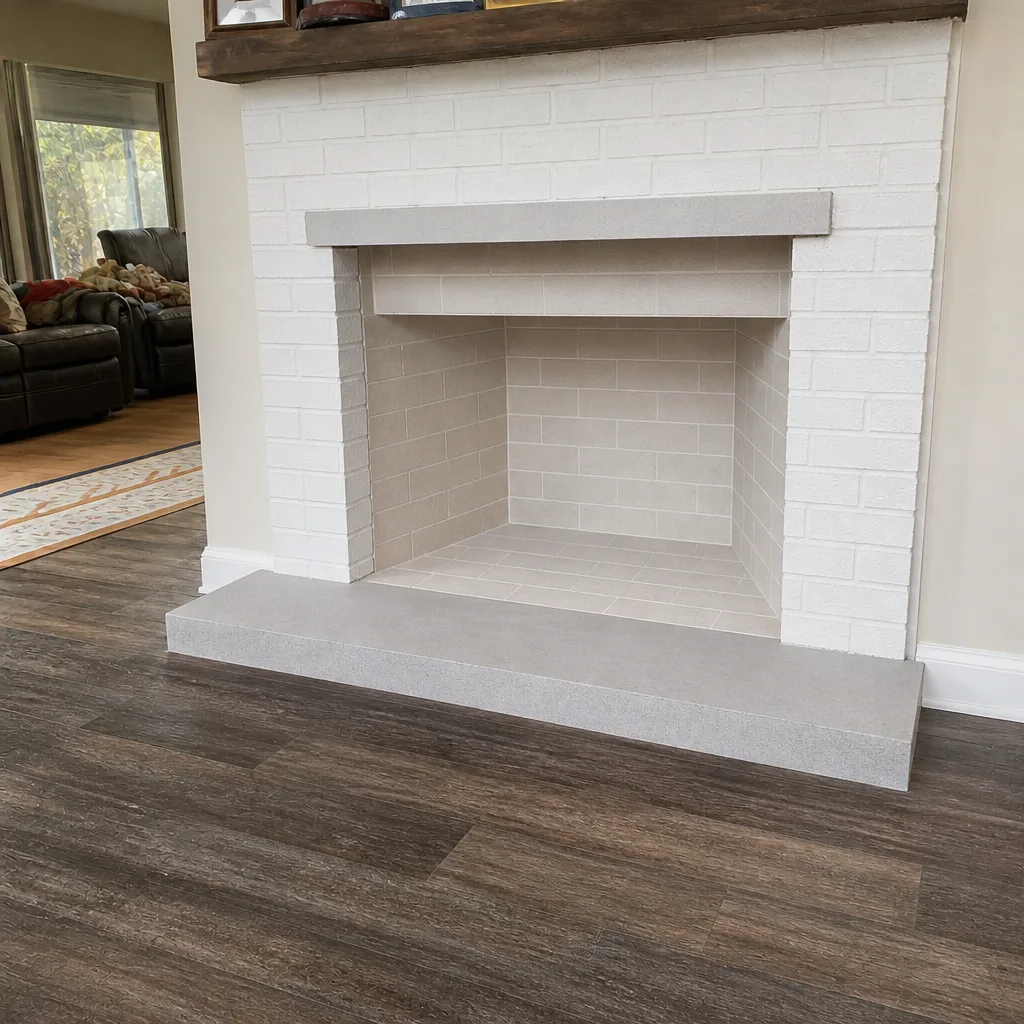
See the difference
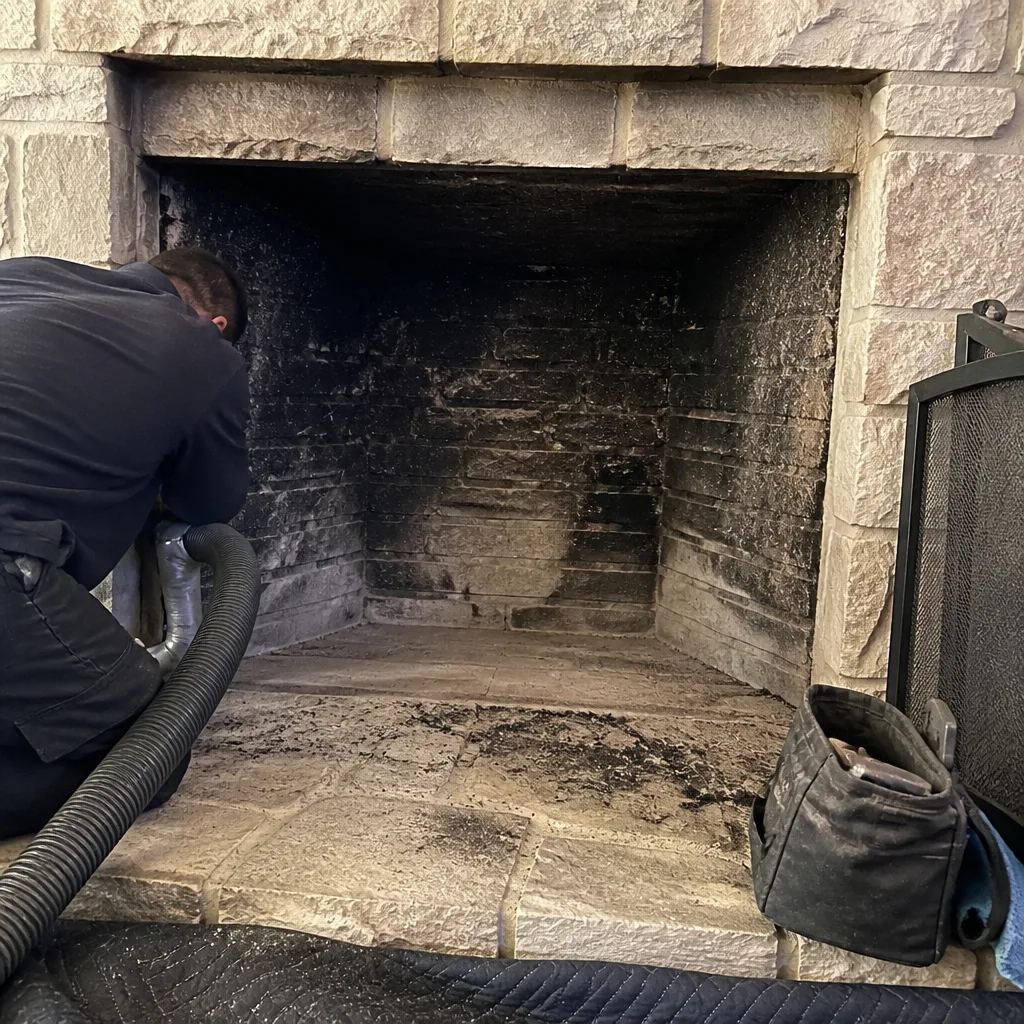 Before
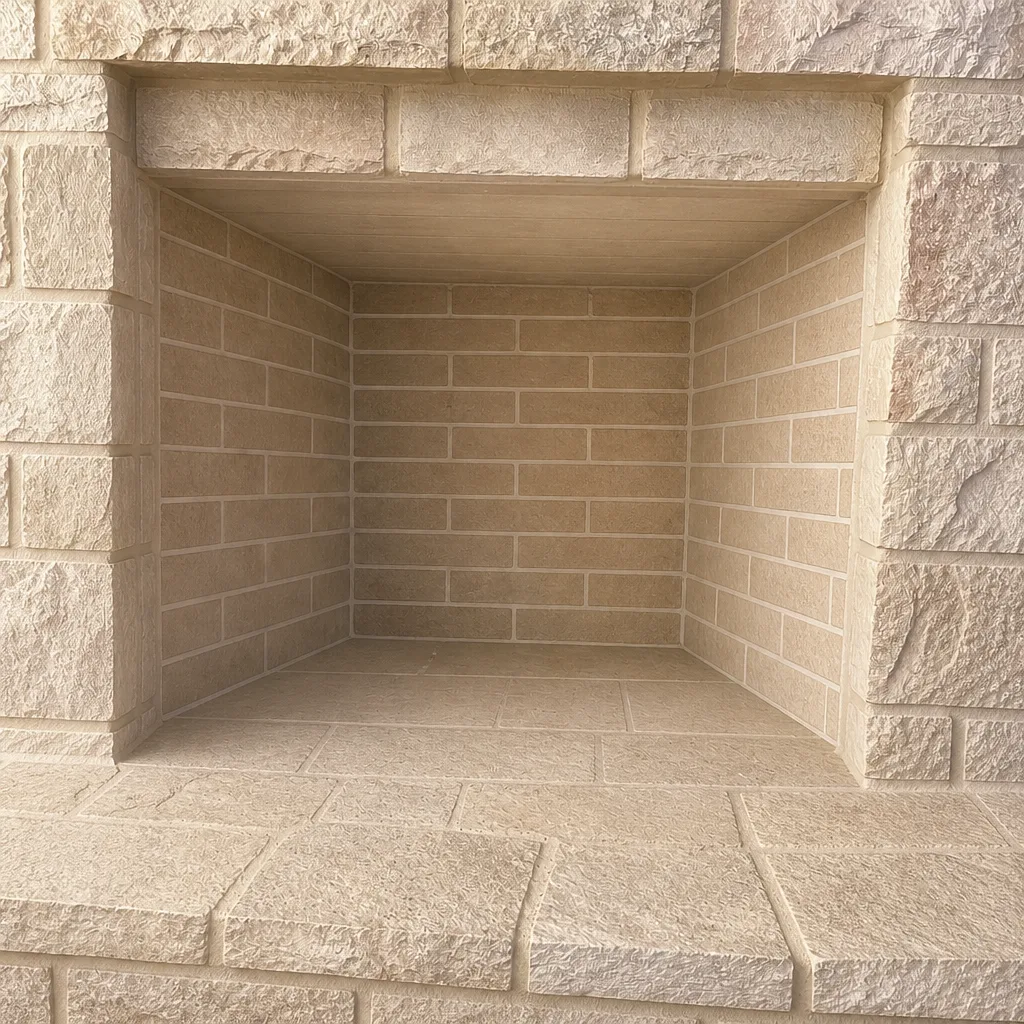 After
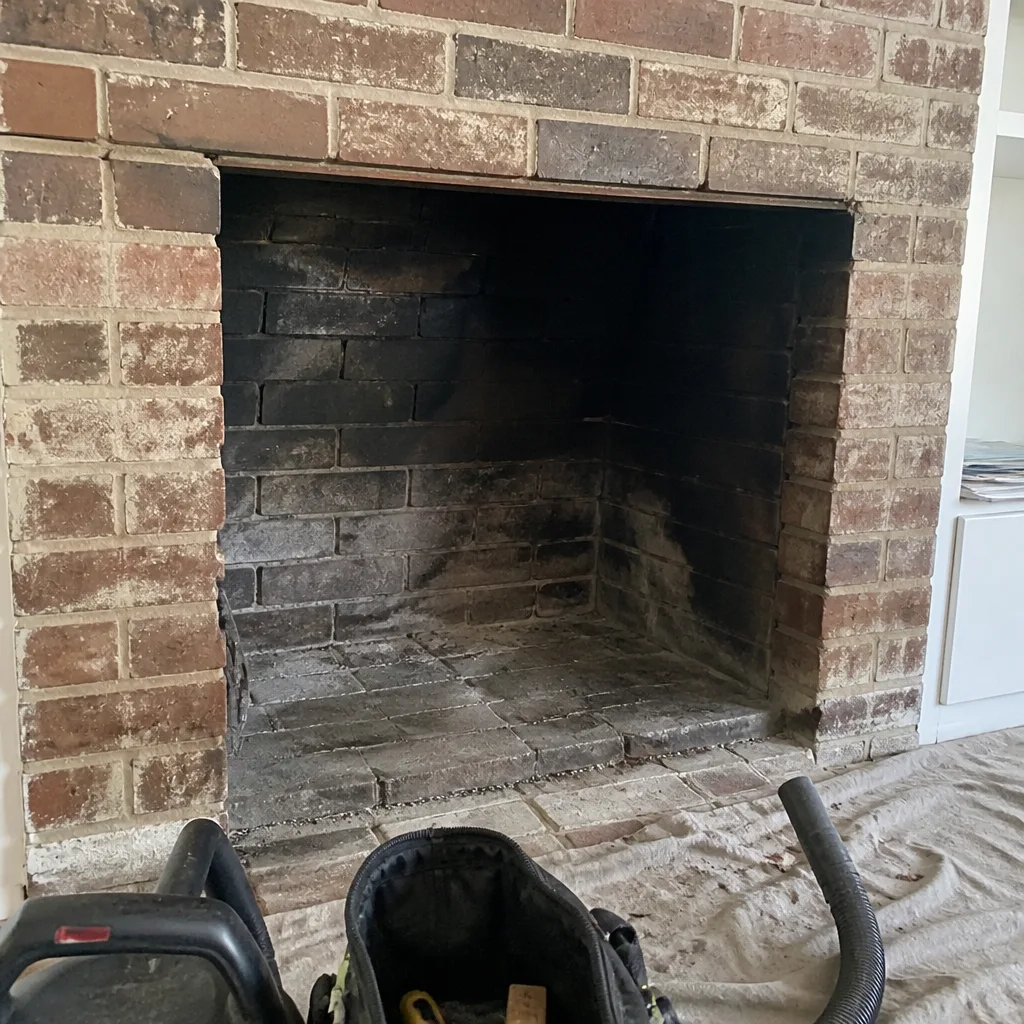 Before
 After
 Before
 After
When to Call a Professional
Call a professional chimney sweep in Oklahoma City whenever any of these apply: your chimney hasn’t been inspected in more than a season, you’ve had a chimney fire, the fireplace smokes into the room, you’ve noticed creosote stage II or III during a prior inspection, you’re buying or selling a home, you’re filing an insurance claim, or you’ve never had the chimney looked at and don’t know its history. Those are all situations where the diagnostic capability matters more than the cleaning itself.
If none of those apply – the flue is straight, the last inspection was recent, and you’re just brushing down loose soot between scheduled sweeps – DIY cleaning is a reasonable maintenance task. Keep it modest, keep it between professional visits, and keep an eye out for anything the brush reveals that concerns you.
Linden Chimney Cleaning offers free estimates in Oklahoma City. We inspect it, clean it, and fix it – all under one company, so a burned-out liner or a failed crown doesn’t turn into a referral to someone else. Repair work, including relining with DuraFlex flexible liner systems or ceramic flue resurfacing with HeatShield, is handled by the same company that does the sweep. Our technicians have up to 8 years of experience working chimneys and only chimneys.
Frequently Asked Questions
Yes, if the flue has been professionally inspected and confirmed to have only light Stage I creosote, no structural damage, and no history of chimney fire. In that specific case, brushing down loose soot between professional sweeps is a reasonable maintenance task. Anywhere outside that narrow scope – unknown condition, older liner, prior fire, or a flue the homeowner has never had looked at – the inspection needs to happen first, and only a professional can perform it.
It can be. The danger isn’t usually the brushing itself – it’s cleaning without inspecting first. A homeowner who brushes a flue that’s been through a chimney fire without a camera assessment is treating structural damage as a cleaning problem. Re-lighting a fractured flue after that mistake is a serious risk. Roof access is the other hazard, especially for two-story homes or steep roofs. Trained professionals use fall protection, camera equipment, and HEPA containment for good reason.
Cleaning removes creosote and soot. Inspection evaluates the condition of the chimney – the liner, the smoke chamber, the cap, the crown, and the firebox – using a camera and a trained eye. They’re distinct services, and both matter. A sweep without an inspection is cleaning blind. An inspection without a sweep is diagnosis without treatment. At Linden Chimney Cleaning we do both, and usually in the same visit.
Yes, in most cases. The part of the flue you can see from the firebox is a small fraction of the flue interior – often less than a quarter of the total surface area. The critical zones are the smoke chamber above the damper and the upper flue near the cap. A camera inspection sees what a firebox look-up doesn’t, and it’s the only reliable way to know whether the surface brushing you did actually removed what needed removing.
No. An insurance claim after a chimney fire typically requires professional assessment, camera or photo evidence, and an itemized scope of any damage. A DIY cleaning produces none of that, and cleaning before an inspection can make the damage harder to document afterward. The correct order is inspection first, documentation second, cleaning third. If your carrier has specific requirements, check with them directly – but plan on a professional report being part of the claim.
Once a year for an actively used fireplace, with an inspection at the same visit. Heavier users – homeowners who burn multiple fires a week during cold snaps – may need more frequent cleaning, especially if the wood isn’t fully seasoned. Homes with older clay tile liners or that have been idle for years should be inspected before the first burn of the season regardless of how much they were used the year prior.
The Bottom Line
DIY chimney cleaning isn’t a scam and it isn’t useless – it’s a narrow tool that works in one specific situation. It removes light surface soot from a straight, accessible, already-inspected flue. What it can’t do is tell you whether that flue is safe to use, and that’s the actual question most homeowners are trying to answer when they pick up a chimney brush in a hardware store in Oklahoma City.
The clean decision framework: inspection first, always. Cleaning is maintenance. Inspection is what makes the cleaning meaningful. If you can’t remember when your chimney was last inspected – or if it’s ever been inspected – that’s the answer to what to do next. Call a professional sweep, get the camera report, and then decide whether you’re comfortable with routine DIY brushing in between.
For a professional chimney repair assessment or a routine sweep with camera inspection, call (866) 334-8781 for a free estimate. We answer 24/7. Fast dispatch from 7am to 7pm, Sunday through Friday. We’ll inspect it, clean it, and give you a written account of what we found – no pressure, no guesswork, no recommendations without evidence you can see for yourself.
Written by the team at Linden Chimney Cleaning.