
Last updated November 16, 2026
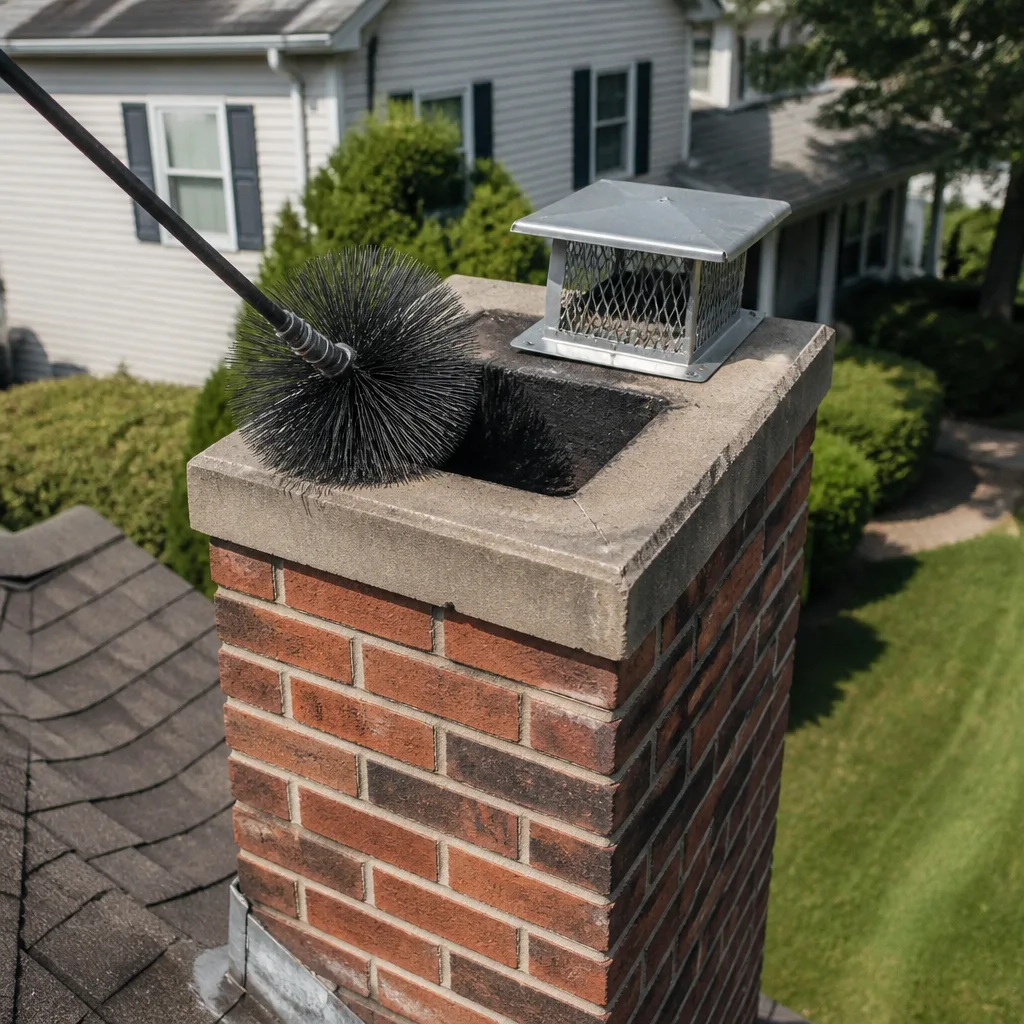 Sweep & inspection
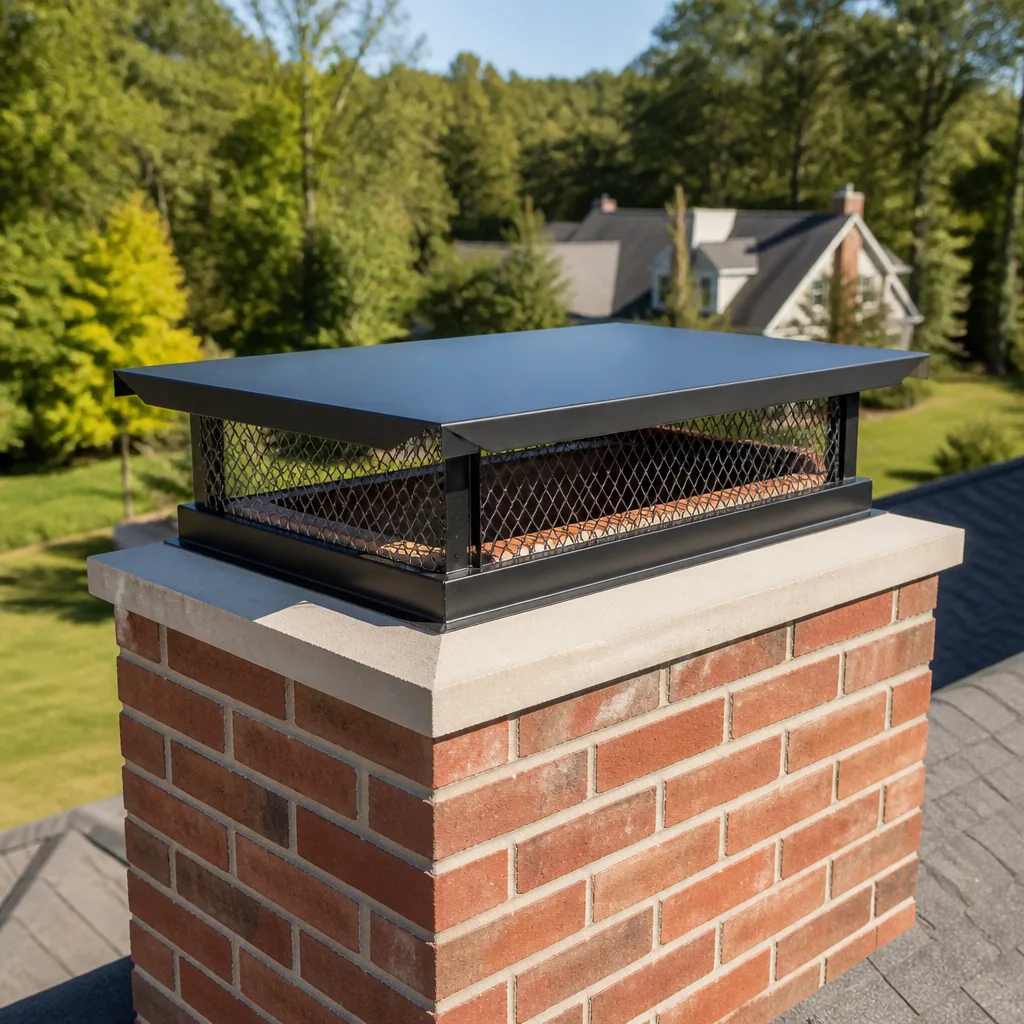 Caps & crowns
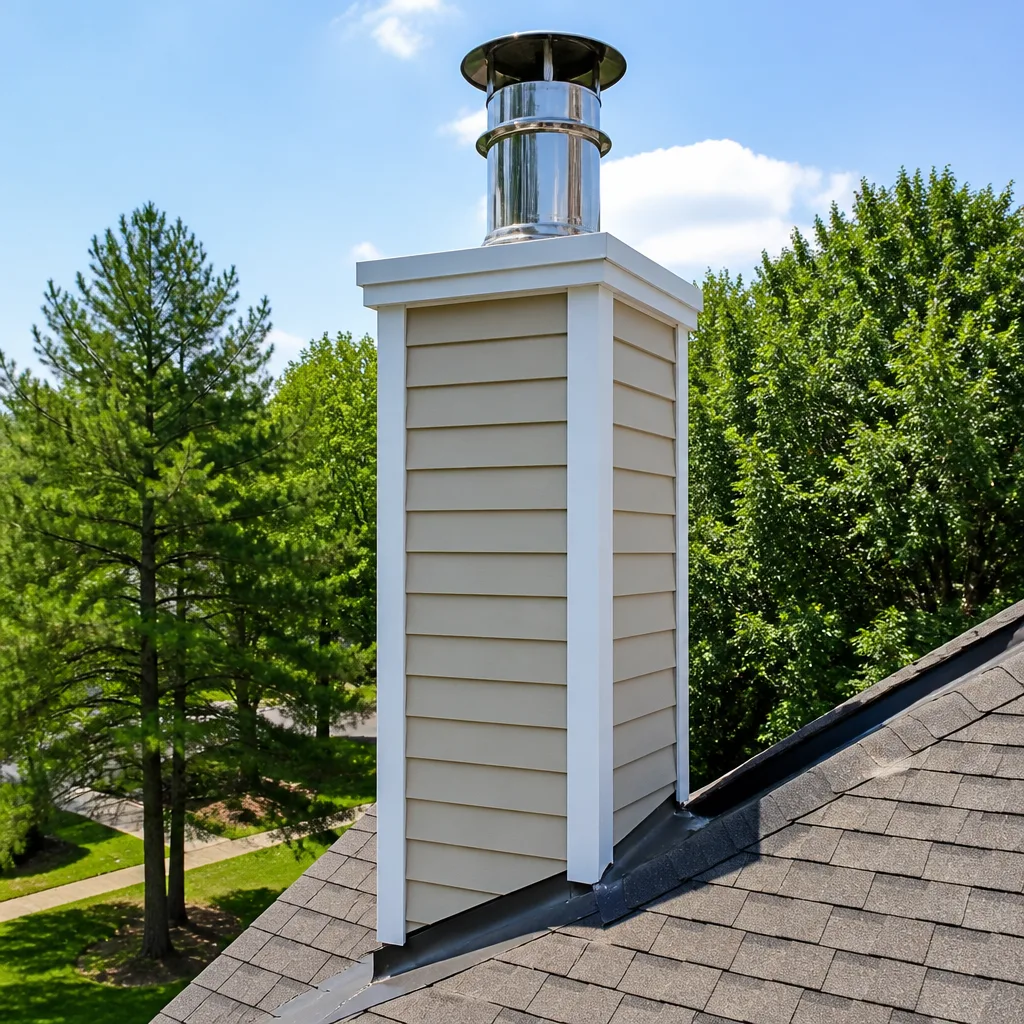 Flue relining
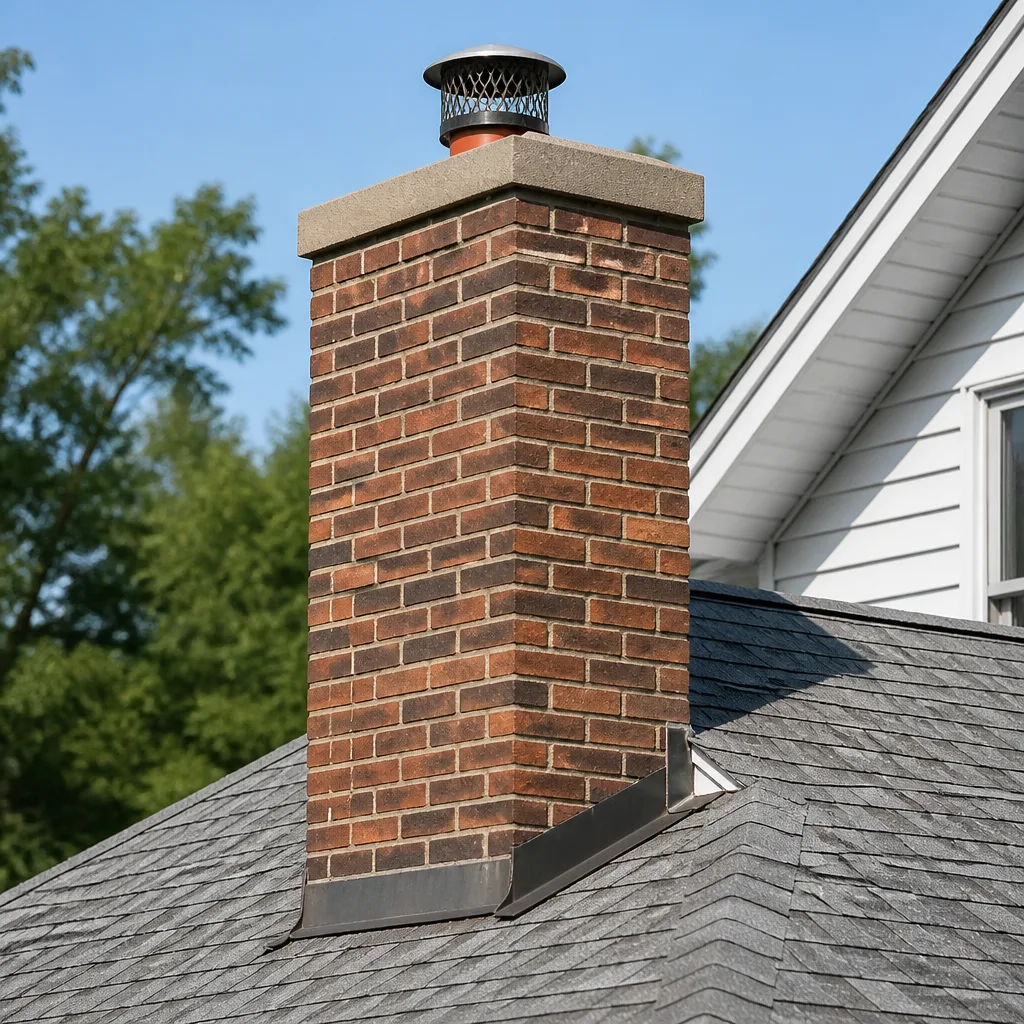 Masonry repair
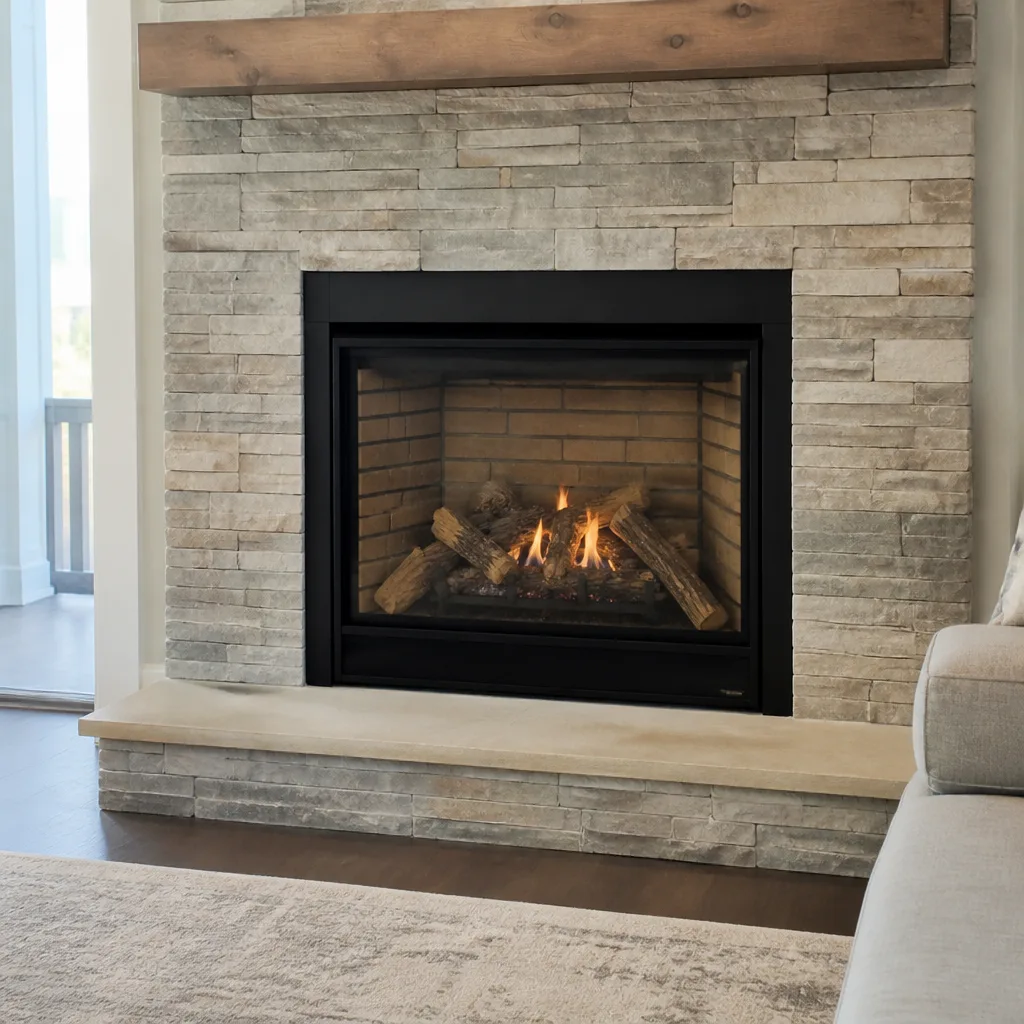 Gas fireplace service
Level 1 sweep and inspection to the NFPA 211 annual standard - flue, crown, cap, and flashing checked and photographed
Chimney sweep logs do not sweep chimneys. They loosen some creosote - which then falls where a brush and vacuum still have to collect it.
Chimney Cleaning Cost Breakdown: The Oklahoma City Homeowner’s Reference for 2026
A $79 chimney cleaning and a $299 chimney cleaning are rarely competing on price. They’re competing on scope. One includes a camera inspection, a written report, and smoke chamber brushing. The other quietly leaves all three out and hopes you won’t ask. That’s the real reason chimney cleaning quotes in Oklahoma City can vary by 300% or more without anyone actually price-gouging you. The cheap quote isn’t a discount – it’s a smaller job. In this guide, we break down what each line item in a chimney quote actually covers, what Oklahoma City pricing looks like in 2026, what legitimately drives costs up, and the five questions every quote should answer before you compare a single number.
Quick Answer
A full-scope chimney cleaning in Oklahoma City in 2026 typically runs $175 to $325 and includes the sweep itself, a Level I visual inspection, and a written report. A cleaning bundled with a Level II camera inspection runs $250 to $450. Smoke chamber cleaning, cap replacement, and any repairs or relining are quoted separately by the job. The lowest quote you get is usually the smallest scope – not the best deal.
Styles & brands we work with
- Sweep & inspection
- Caps & crowns
- Flue relining
- Masonry repair
- Gas fireplace service
Table of Contents
- What’s Actually Inside a Chimney Cleaning Quote
- Oklahoma City 2026 Price Benchmarks by Service Type
- What Legitimately Drives Price Variation
- Hidden Scope Reductions That Inflate Apparent Value
- How to Compare Quotes Apples-to-Apples
- Creosote Stages and Why They Change the Job
- Oklahoma City Chimney Conditions That Affect Cost
- When to Call a Professional
What’s Actually Inside a Chimney Cleaning Quote
Most homeowners assume a chimney cleaning is one thing. It’s not. A properly scoped cleaning has four distinct components, and each can be bundled, itemized, or quietly dropped from the quote without you noticing.
The four components are:
- The sweep itself. Brushing the flue from the firebox up through the chimney top, with a drop cloth and vacuum setup to keep soot out of the house. This is the part everyone expects.
- The Level I visual inspection. A trained technician looks over the firebox, damper, smoke chamber, flue, and cap – the parts you can inspect without special tools. This should be standard on every sweep.
- The camera inspection (Level II). A video-scope run down the flue to look for cracks, gaps in the liner, offsets, and signs of previous damage. This is where cheap quotes frequently cut.
- The written report. A documented account of what was found, what was cleaned, and what needs attention. Without this, you have no record of the chimney’s condition, no baseline for next year’s sweep, and no evidence if something goes wrong.
Smoke chamber brushing is sometimes rolled into a standard sweep and sometimes quoted as a separate add-on. The smoke chamber is the sloped, corbeled space just above the damper – it collects creosote aggressively, it’s awkward to reach, and it’s the part most cleaning-only outfits skip. If a quote doesn’t mention the smoke chamber at all, assume it’s not being cleaned.
A proper chimney sweep from a dedicated specialist covers all four components as one scope. A cleaning-only service that “sweeps and goes” typically covers one of four – and sometimes less.
Oklahoma City 2026 Price Benchmarks by Service Type
Below are typical estimated ranges for chimney services in Oklahoma City in 2026. These are estimates, not quotes – the written estimate you receive after an inspection sets the final price. The purpose here is to give you a framework for comparing what you’re being offered, not to set a hard number anyone should insist on.
| Service | Typical Oklahoma City Range (2026) | What’s Usually Included |
|---|---|---|
| Basic chimney sweep | $150 – $250 | Flue brushing, drop cloth setup, soot cleanup. May or may not include inspection. |
| Full-scope sweep (bundle) | $175 – $325 | Sweep, Level I visual inspection, smoke chamber brushing, written report. |
| Level I inspection (alone) | $75 – $150 | Visual check of firebox, damper, smoke chamber, flue, cap. No camera. |
| Level II inspection (camera) | $200 – $400 | Video-scope of the flue plus visual inspection, written report with photos. |
| Sweep + Level II bundle | $250 – $450 | Full cleaning plus camera inspection and documented report. |
| Smoke chamber cleaning (add-on) | $75 – $175 | Hand brushing of the smoke chamber above the damper. |
| Cap replacement | $150 – $400 | New cap supply and install, sized to the flue. Varies with cap style and material. |
| Liner replacement | Quoted per job | Full relining with a flexible liner system, sized to the flue. Estimate after inspection. |
| Flue resurfacing (HeatShield) | Quoted per job | Ceramic resurfacing of a damaged flue as an alternative to a rebuild. Estimate after inspection. |
Two things stand out in that table. First, the gap between a sweep with inspection and a sweep without it is $25 to $75 – small next to the cost of missing a damaged liner for a season. Second, liners and resurfacing are always quoted per job after inspection, because the cost swings widely with flue height, diameter, and access. Any company that quotes a fixed liner price over the phone is guessing.
What Legitimately Drives Price Variation
Not every price difference is a scope cut. Some quotes honestly come in higher because the job is genuinely bigger. Here are the factors that legitimately move a chimney cleaning price up:
- Chimney height. A taller chimney takes more time to brush, more brushes, and more ladder work. Two-story flues cost more than single-story ones simply because there’s more chimney to clean.
- Flue configuration. Straight flues are quick. Offset flues – common in older homes throughout central Oklahoma City – require reaching around a jog in the chimney, which slows the sweep considerably.
- Creosote stage. Stage I creosote (light soot) brushes off easily. Stage II (glazed, crusty) needs more aggressive brushing. Stage III (hard, glazed, tar-like) sometimes can’t be removed by brushing at all and requires chemical treatment or resurfacing.
- Access difficulty. A chimney on a steep-pitch roof, surrounded by obstacles, or reached only through tight attic space takes longer and requires more safety setup. That cost is real, not padding.
- Chimney condition. Heavily neglected chimneys with debris, animal nests, or partially collapsed flue tiles take longer to clean safely than well-maintained ones.
- Number of flues. A house with two fireplaces or a fireplace plus a heating appliance flue means two cleanings, not one.
What does not legitimately drive price: the day of the week, the time of year, whether it’s raining, or “rush” scheduling. A company that charges more for a Saturday appointment or an “emergency” sweep is pricing on urgency, not on the work. In our experience, the honest answer is that the job costs what the job costs, and it’s scheduled around availability – not around pressure.
Oklahoma City’s climate adds one factor worth calling out. Our spring storm season and the occasional ice event mean caps take a beating, and a missing or damaged cap lets water and debris into the flue between burning seasons. A cheap sweep that doesn’t check the cap isn’t saving you money – it’s deferring a repair that will cost more once water intrusion has damaged the flue lining.
Hidden Scope Reductions That Inflate Apparent Value
Here’s the truth behind the $79 quote. In almost every case, it’s not a loss leader on a full-scope cleaning. It’s a smaller job with a smaller price. The reductions that show up most often in Oklahoma City-area quotes are:
- No camera inspection. The single biggest scope cut. A visual look down the flue from the top and firebox catches obvious problems. It does not catch cracks in the liner, gaps at offsets, or damage inside a flue that looks fine from either end. Camera inspection is the difference between “it looks okay” and “we know it’s okay.”
- No written report. A verbal “all good” is not documentation. If your chimney fails an inspection next year, you have no baseline. A written report is the record of what your chimney looked like after this service.
- No smoke chamber brushing. The smoke chamber collects creosote faster than the flue in many Oklahoma City homes because of the corbeled shape. Skipping it means the most flammable part of the chimney never gets cleaned.
- No cap check. Caps are cheap to inspect and expensive to ignore. A missing cap lets in rain, squirrels, and nesting birds, and water damage to a flue liner becomes a relining job.
- No firebox inspection. The firebox takes direct heat and is where most cracks begin. If it isn’t inspected, you don’t know whether the firebox is safe to burn in.
- “Free” inspection that’s really a sales call. A cleaning company that hands the inspection off to a separate contractor isn’t inspecting – it’s referring. If the inspection “finds” expensive problems that a second opinion can’t confirm, that’s a scope problem, not a savings.
Each of those cuts saves the company time and materials. Each of those cuts also quietly transfers risk back to you. A chimney isn’t a system that fails loudly. It fails quietly, over seasons, until it doesn’t.
How to Compare Quotes Apples-to-Apples
Getting three quotes is smart. Comparing them without aligning scope is not. Here’s the five-question framework we suggest every Oklahoma City homeowner use before sorting quotes by price:
- “Does this quote include a Level II camera inspection?” If not, the quote is a partial scope. Ask what it would cost to include the camera run. That number is your real comparison point.
- “Will I receive a written report with photos?” If the answer is “we’ll let you know if we see anything,” that’s not a report – that’s a verbal summary. Written documentation is a standard part of a professional cleaning.
- “Does this include smoke chamber brushing?” If the answer is “that’s extra,” get the extra price and add it to the total before comparing.
- “Are you inspecting the cap and firebox, and is that included?” Both should be standard. If either is billed separately, add it.
- “Who does the repairs if something comes up?” If the company doing the sweep can’t do the repair and refers you out, you’re paying for a cleaning and a fact-finding mission, then starting over with a new contractor for anything found. A dedicated chimney specialist handles the sweep, inspection, and repair under one roof.
Once you have those five answers for every quote, the comparison becomes real. In our experience across Oklahoma City, the quote that looked $100 higher on the phone is often the quote that included $150 worth of scope the cheaper companies left out. Sorting by that kind of comparison usually lands you at the right place – not the cheapest, but the one where the number matches the work.
If you want a written comparison framework, a full-scope chimney repair provider should be able to walk you through it before you commit to anything.
Creosote Stages and Why They Change the Job
Creosote is the tar-like residue left behind when wood smoke cools on the inside of the flue. It’s the single biggest reason a chimney cleaning varies in cost from house to house on the same street in Oklahoma City.
The industry classifies creosote in three stages, and each stage means a different job:
- Stage I – soot and light flaky deposits. The easiest to remove. Standard brushing clears it. Most annually maintained chimneys stay at this stage.
- Stage II – glazed, crusty, and layered. Brushing alone often won’t clear it. A technician may need special brushes, chemical treatments, or a longer working time. Quotes for Stage II cleanings are higher because the work is genuinely more involved.
- Stage III – hard, glazed, tar-like. Sometimes called “glazed” creosote in the trade. Brushing usually won’t remove it. Options often come down to chemical treatment, resurfacing, or in some cases partial relining, because the flue surface itself is compromised.
Two things drive creosote buildup in Oklahoma City specifically. First, our cold snaps in January and February tend to compress the burning season – people burn hot and fast, or slow and cool, depending on the day. Cool, smoldering fires produce far more creosote than hot, active burns. Second, our relatively long shoulder season means some fireplaces sit unused for months, then get fired up hard in a cold week without a cleaning in between.
This is where HeatShield matters. When creosote has reached Stage III and brushing won’t clear it, or when the flue has become damaged enough that a rebuild would otherwise be required, HeatShield resurfacing lets a specialist restore the ceramic surface of the flue without tearing the chimney down. That’s a service tier most single-service sweeps can’t offer, and it’s often the middle path between “clean it again” and “rebuild the whole thing.”
Oklahoma City Chimney Conditions That Affect Cost
Chimneys in Oklahoma City face a specific combination of pressures that affect what cleaning and repair costs locally. Understanding them helps you read a quote honestly.
Storm season and caps. Our spring weather routinely rips caps loose, bends them, or pulls them off entirely. A cap is what keeps water out of the flue and animals out of the chimney. When we inspect caps, we look at fit and anchoring, not just presence. Caps and covers from Gelco and Famco are the kinds of professional-grade components that hold up through an Oklahoma spring; a cheap builder-grade cap often doesn’t. Replacement runs $150 to $400 depending on style and flue size.
Clay tile flues and cracking. Many older homes around the metro – especially in neighborhoods with mid-century housing stock – have clay tile flue liners. Clay is durable but brittle, and it cracks with thermal cycling. A camera inspection is the only way to see a cracked tile joint before it becomes a fire pathway. This is why we consider the camera run non-negotiable on any home with a clay flue, and why it’s a core part of our workflow.
Winter burn intensity. Our winters swing. A mild December followed by a hard January cold snap means fireplaces that sat unused go straight into heavy use. Chimneys that haven’t been swept in a season or two can reach Stage II creosote faster than expected in that pattern.
Liner condition. When a clay flue is cracked or a metal liner is deteriorated, relining with a flexible system like DuraFlex restores the flue without a rebuild. Because Oklahoma City homes vary so much in chimney construction, liner costs are always quoted after inspection rather than over the phone – a legitimate relining estimate requires knowing the flue’s exact dimensions and condition.
If any of that reads familiar for your home in Oklahoma City, it’s worth a conversation before the next burning season starts, not after.
Common Mistakes to Avoid
- Comparing a sweep-only quote to a full-scope quote. They’re not the same job. Sort quotes by what’s included, not by the total, or you’ll almost always choose the smaller scope by accident.
- Accepting a verbal “you’re all good” without a report. Documentation matters if something comes up later – it’s your baseline. No written record means no proof of condition, and no basis for next year’s comparison.
- Letting a general handyman sweep the chimney. Chimney work has its own tools, its own safety setup, and its own inspection standards. A handyman outfit is doing it as a sideline, which means parts and expertise for the actual chimney system are somewhere else.
- Waiting for a problem before getting the first inspection. The first inspection should happen before the first burn, not after a smell, a draft issue, or a visible crack gets you on the phone. The baseline matters.
- Skipping the cap to save money. In Oklahoma City storm season, a missing cap is an open door for water, debris, and animals. A cap replacement at $150 to $400 costs a fraction of what water-damaged flue lining does.
- Assuming a cheap quote means a good deal. It usually means a smaller job. That’s not automatically bad – but you should know which one you’re buying before you commit, and you should ask what the full-scope price would be.
- Booking a sweep without booking an inspection. A cleaning without an inspection tells you the flue is cleaner, not that it’s safe. The inspection is the safety information; the sweep is the maintenance.
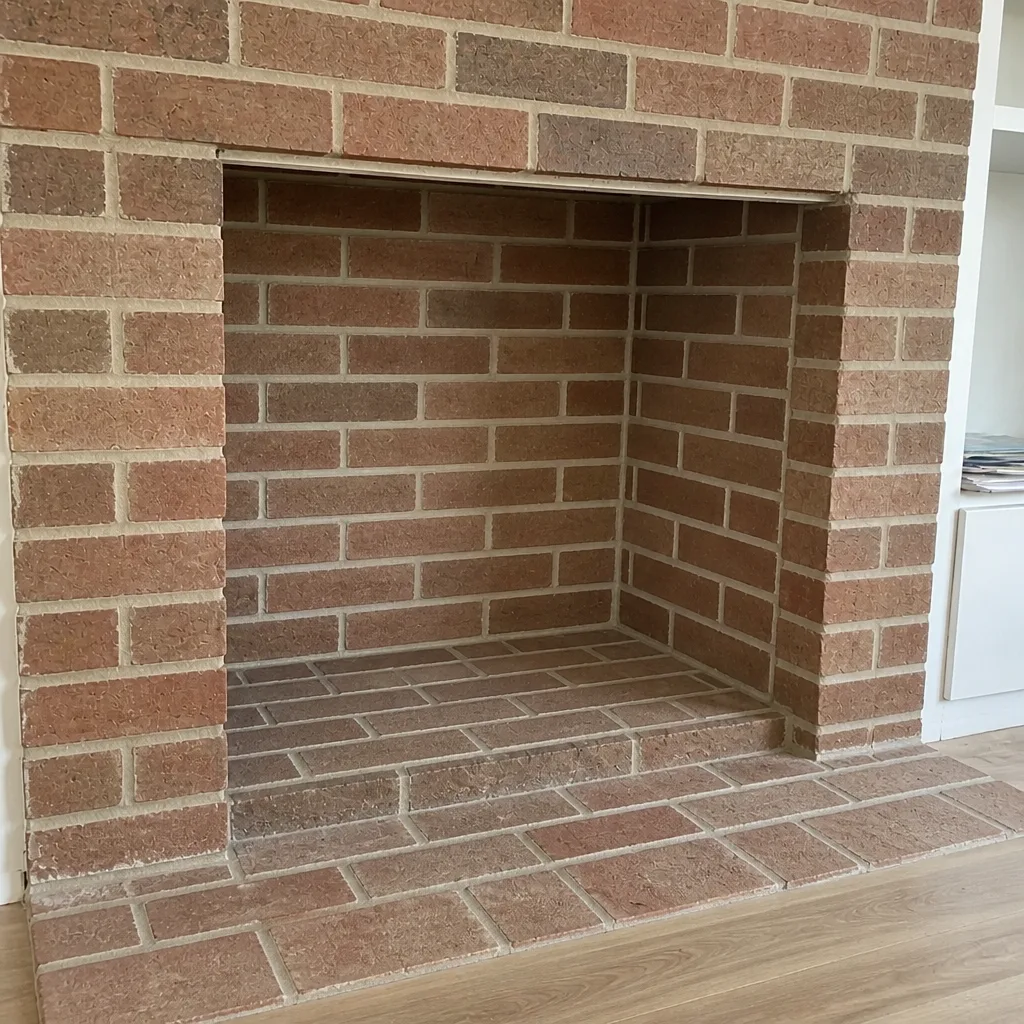
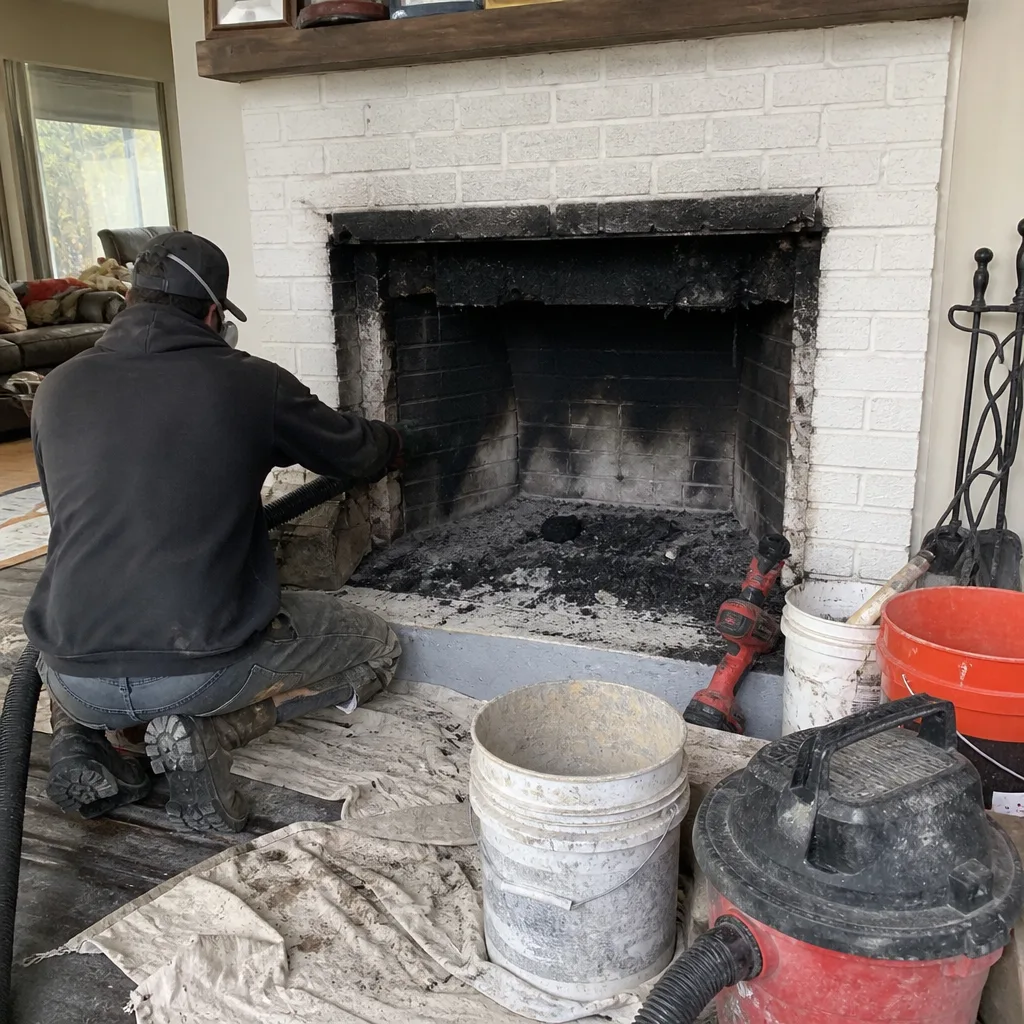
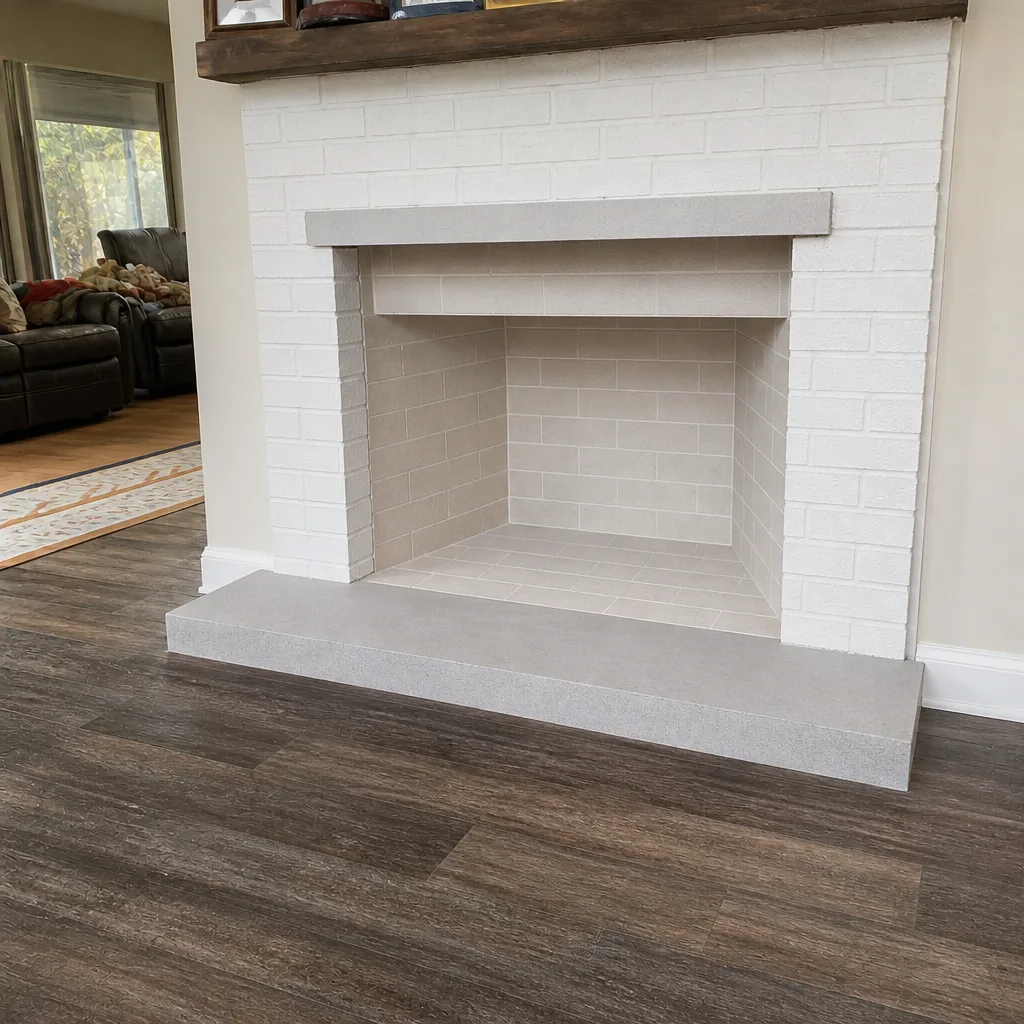
See the difference
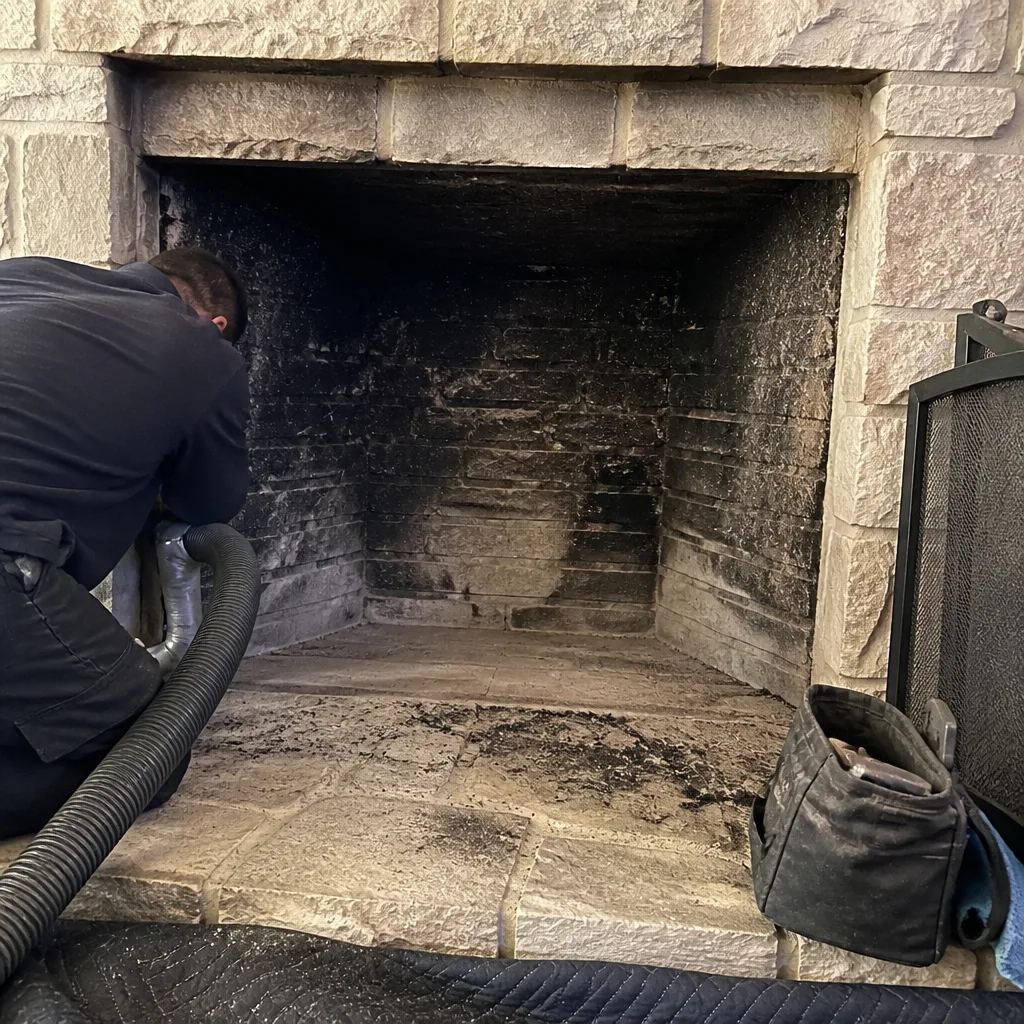 Before
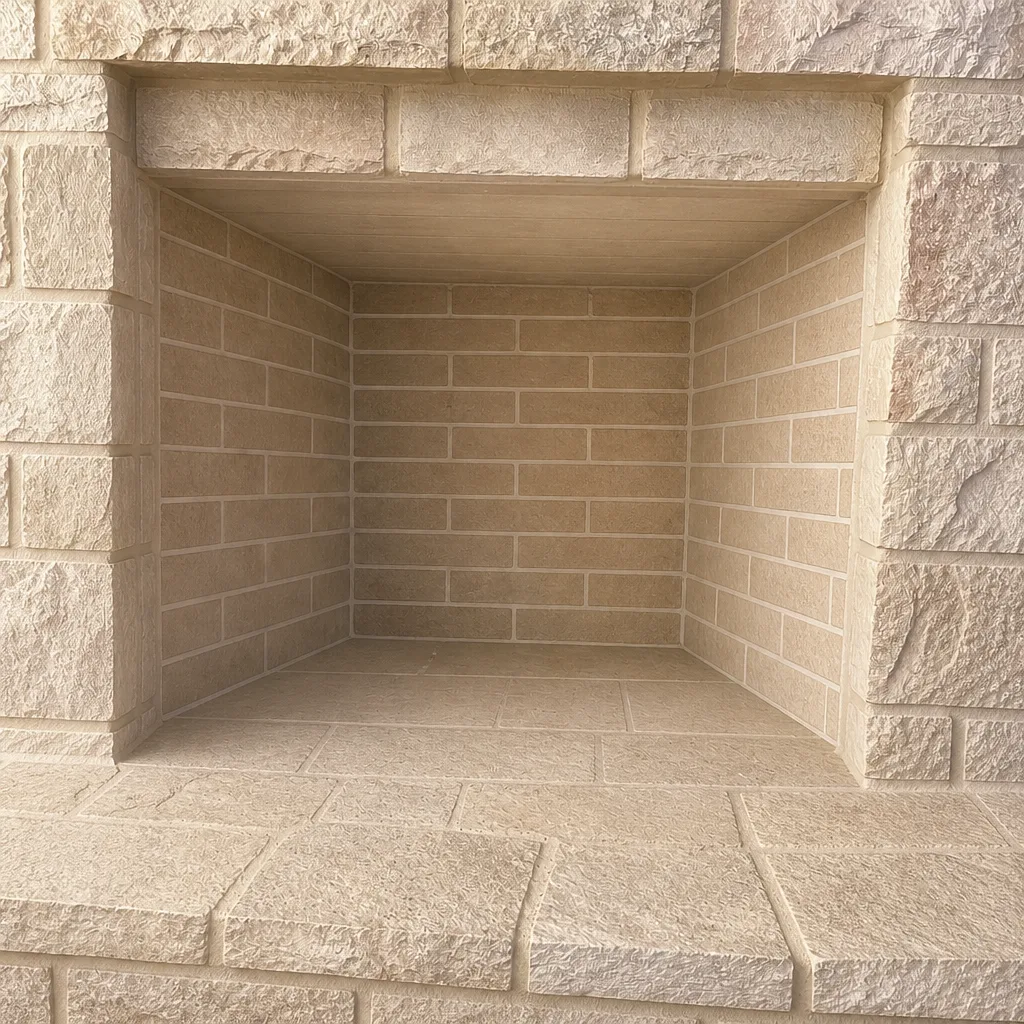 After
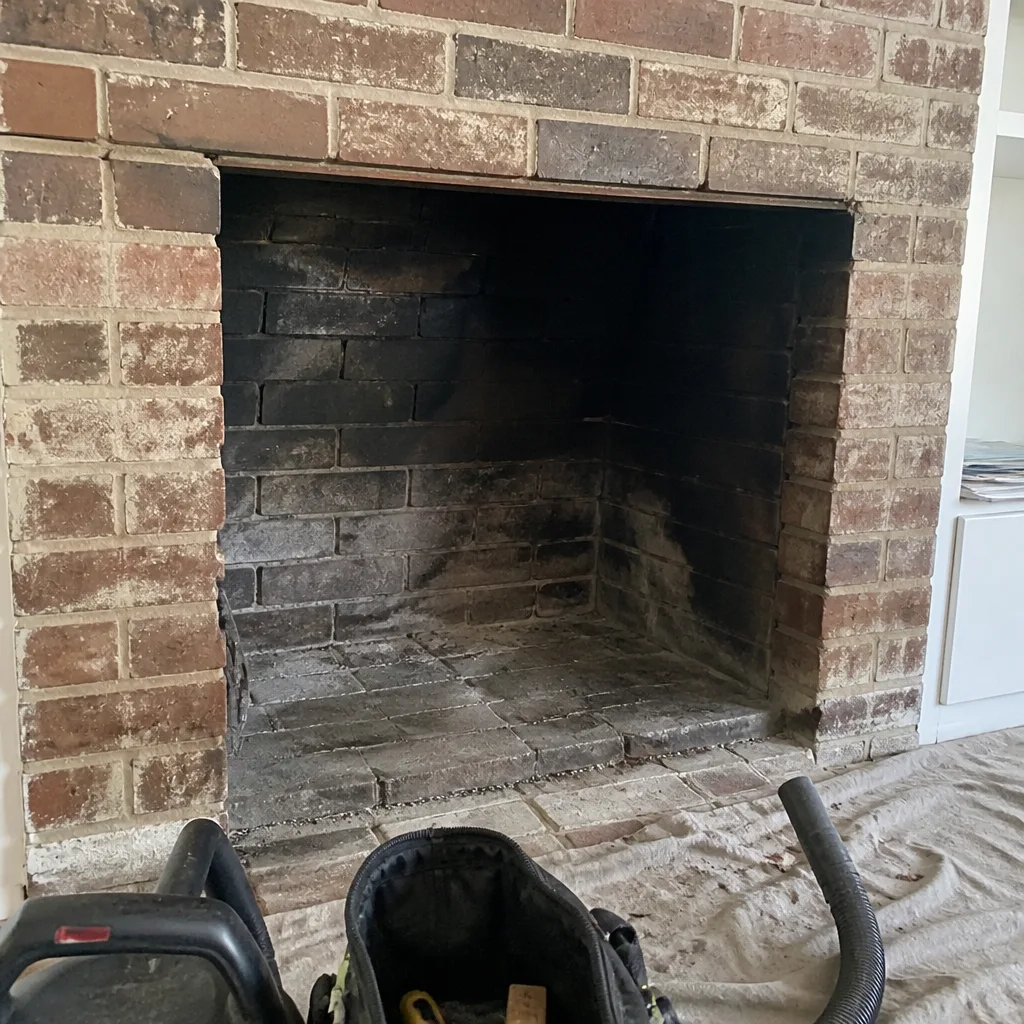 Before
 After
 Before
 After
When to Call a Professional
Call a professional if any of the following is true: you’ve never had your chimney professionally inspected, you’ve burned wood for a full season without a sweep, you’ve noticed a strong smoky smell when the fireplace isn’t in use, you see visible cracks in the firebox or the outer chimney masonry, the cap is missing or damaged, or you’re not sure whether the flue has ever been camera-inspected. Any of those conditions is worth a call. None of them is something to wait a season on.
We work only on chimneys – sweep, inspection, and repair – so the technician who walks into your home is set up for exactly this, not for three other trades on the side. Linden Chimney Cleaning offers free estimates in Oklahoma City. Call (866) 334-8781. We answer 24/7. Fast dispatch from 7am to 7pm, Sunday through Friday.
Frequently Asked Questions
A standard full-scope chimney sweep in Oklahoma City in 2026 typically runs $175 to $325 and includes brushing, a Level I visual inspection, smoke chamber cleaning, and a written report. A sweep bundled with a Level II camera inspection usually runs $250 to $450. Call (866) 334-8781 for an exact quote – estimates are free.
Only if the camera inspection shows your existing liner is cracked, deteriorated, or sized wrong for the appliance – and you should be able to see the camera footage yourself. If the liner is intact and properly sized, no. A repair specialist who recommends relining without showing you the evidence is one to question. We show what the camera found before we recommend anything. Call (866) 334-8781 for an exact quote – estimates are free.
The general rule for a wood-burning fireplace is once per year, and more often if you burn heavily, burn unseasoned wood, or have a Stage II or Stage III creosote situation. In Oklahoma City, the practical schedule is once before burning season begins and again if the winter compresses into a heavy-burn pattern that produces visible buildup. Call (866) 334-8781 for an exact quote – estimates are free.
Creosote builds up in stages. Stage I soot is harmless to leave for a season. Stage II and III creosote are the flammable kind, and a hot fire can ignite them, which is a chimney fire. Separately, skipped inspections mean cracks in the liner or firebox can go unseen, which allows heat or combustion gases where they shouldn’t go. Neither outcome is inevitable after one skipped season – but both become more likely the longer it runs. Call (866) 334-8781 for an exact quote – estimates are free.
Yes on any home you haven’t had fully inspected, on any home with a clay tile flue, on any chimney that’s had a repair or liner installed previously, and on any home you’ve just moved into. Oklahoma City’s clay tile flues crack with thermal cycling and the cracks aren’t visible without a camera. Level II inspections run $200 to $400 standalone, and less when bundled with a sweep. Call (866) 334-8781 for an exact quote – estimates are free.
Ask each company the five scope questions: does the quote include a camera inspection, a written report, smoke chamber brushing, cap and firebox inspection, and can they handle any repairs found without referring you out. The quote that answers yes to all five is the fuller scope. Compare the total after aligning those answers, not before. Call (866) 334-8781 for an exact quote – estimates are free.
The professional trade uses recognized brands like DuraFlex for flexible liner systems, HeatShield for ceramic flue resurfacing, and Olympia Chimney as a supply network for chimney-specific components. Gelco, Famco, and Copperfield supply caps, covers, and specialized parts. A chimney specialist should recognize those names and work with them; a general handyman outfit usually won’t. Call (866) 334-8781 for an exact quote – estimates are free.
The Bottom Line
Chimney cleaning quotes in Oklahoma City don’t vary by hundreds of dollars because of price gouging. They vary because the quotes describe different jobs. A $150 quote and a $300 quote are not negotiating against each other – one includes a camera inspection, a written report, smoke chamber brushing, and a cap check; the other probably doesn’t. The five scope questions are how you tell them apart. Price matters. Scope matters more. And a chimney specialist who sweeps, inspects, and repairs the whole system is the one who can tell you what’s actually happening inside your flue, show you the footage, and explain what can safely wait. Our technicians have up to 8 years of experience, and we work only on chimneys.
Call (866) 334-8781. We answer 24/7. Fast dispatch from 7am to 7pm, Sunday through Friday. Estimates are free, and the written estimate sets the final price.
Written by the team at Linden Chimney Cleaning.